JNTZN

Tag: amortization

  • Amortization Calculator: See Your Loan Schedule & Savings

    Amortization Calculator: See Your Loan Schedule & Savings

    Borrowing money feels simple right up until the payments start. A loan quote might show one monthly number, but it rarely tells the full story of how much goes to interest, how fast the balance drops, or what an extra payment could really save you. That gap is exactly where an amortization calculator becomes useful.

    For small business owners, freelancers, developers, and anyone managing cash flow carefully, this tool turns loan math into something practical. Instead of guessing, you can see the payment schedule, total interest, payoff timeline, and the trade-offs between loan terms. It is one of the most useful financial tools online because it helps you make decisions before signing, refinancing, or accelerating a payoff.

    What is Amortization calculator?

    An amortization calculator is a tool that shows how a loan is repaid over time through scheduled payments. It takes the core inputs, usually the loan amount, interest rate, loan term, and payment frequency, then calculates how each payment is split between principal and interest.

    At the beginning of many loans, a larger share of each payment goes toward interest. Over time, that shifts, and more of the payment starts reducing the principal balance. This gradual rebalancing is called amortization. The calculator lays it out clearly, often month by month, so you can see exactly what happens from the first payment to the last.

    Side-by-side comparison graphic for two loans with the same principal and rate but different terms: left panel—line showing remaining balance over time for the shorter term (steeper decline); right panel—line for the longer term (shallower decline). Below the lines, two bars comparing total interest paid (shorter term much lower than longer term).

    This matters because the same monthly payment can hide very different financial outcomes. A five-year loan and a seven-year loan may both seem manageable, but the longer term usually means paying more total interest. An amortization calculator makes those differences visible in seconds.

    For business users, this is especially valuable. If you are financing equipment, taking a working capital loan, or evaluating a commercial real estate mortgage, understanding repayment structure is not just about affordability. It is about timing, liquidity, and the true cost of debt.

    Why the schedule matters more than the payment alone

    Many borrowers focus only on whether they can afford the monthly payment. That is understandable, but it is incomplete. A loan is not just a monthly bill, it is a long-term cash commitment with a built-in cost curve.

    An amortization schedule shows that curve. It answers questions like how much interest you will pay in year one, how quickly equity builds, and how much faster the balance drops if you make additional payments. Those details can affect budgeting, tax planning, and investment decisions.

    Common loans that use amortization

    The idea of amortization appears across several borrowing situations. Mortgages are the most familiar example, but they are not the only one. Auto loans, personal loans, student loans, and many business loans also use amortized repayment structures.

    Different lenders may present terms differently, but the underlying logic is the same. You borrow a principal amount, interest accrues according to the rate, and each scheduled payment gradually reduces the balance until it reaches zero.

    Key Aspects of Amortization calculator

    The most useful amortization calculators do more than produce a single payment amount. They give you a full repayment picture, which helps you compare scenarios and avoid expensive assumptions.

    The core inputs that drive the result

    Every amortization calculator depends on a few essential variables. The principal is the amount borrowed. The interest rate determines the cost of borrowing. The term sets how long you repay the loan, and the payment frequency defines whether payments are monthly, biweekly, or another schedule.

    A small change in one of these inputs can have a large impact on total interest. For example, lowering the rate by even one percentage point can save thousands over the life of a mortgage. Shortening the term often raises the monthly payment, but it can dramatically reduce the total borrowing cost.

    This is why calculators are so valuable for comparison. They let you test realistic scenarios before you commit. Instead of relying on a lender’s headline number, you can examine the full repayment pattern.

    Principal vs interest, the split that shapes your loan

    One of the most important concepts in any amortization schedule is the difference between principal and interest. Principal is the original amount you borrowed. Interest is the lender’s charge for providing the loan.

    In the early stage of an amortized loan, interest tends to consume a larger portion of the payment because the balance is still high. As the principal declines, the interest portion shrinks too. That means later payments do more of the real work in eliminating the debt.

    This is why early extra payments can be so powerful. If you reduce principal sooner, future interest is calculated on a smaller balance. Over time, that compounds into meaningful savings.
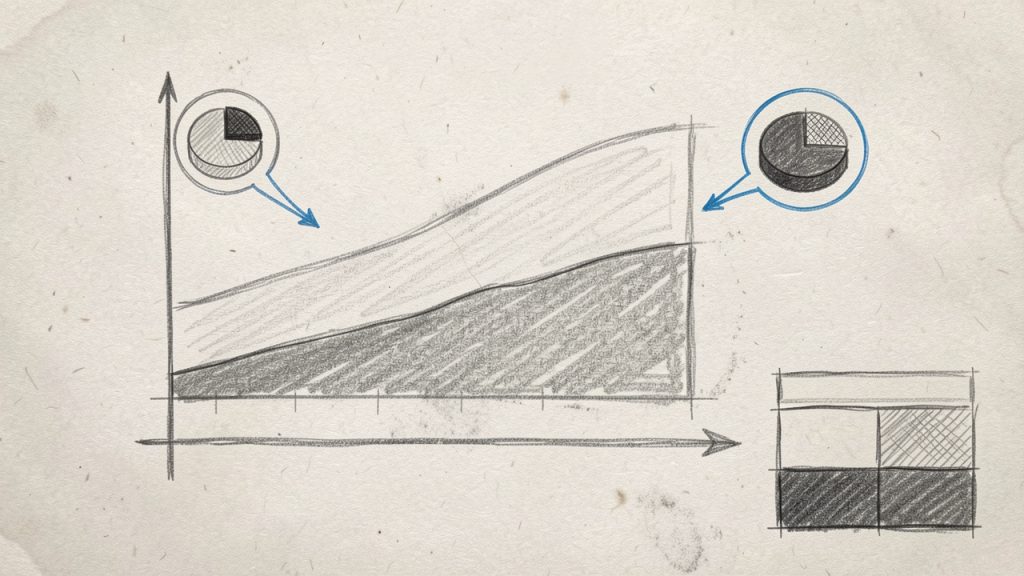
    Stacked area chart showing a single loan’s amortization over time: x-axis = time (months/years), y-axis = payment amount. The lower area (principal) grows over time while the upper area (interest) shrinks, with labels pointing to an early payment (mostly interest) and a late payment (mostly principal). Include a small table excerpt showing one month’s payment split (principal vs interest).

    Loan term and total cost

    A lower monthly payment often looks attractive, especially when cash flow is tight. But stretching a loan over a longer term usually means paying more interest overall. An amortization calculator helps you see that trade-off clearly.

    Consider two loans with the same principal and rate but different terms. The longer loan may feel safer month to month, yet it can keep you in debt much longer and increase the total repayment significantly. For a small business, that can affect available capital for hiring, inventory, software, or marketing.

    The right answer depends on your priorities. Sometimes preserving cash flow matters more than minimizing interest. Other times, an aggressive payoff is the smarter move. The calculator does not make the decision for you, but it gives you the data to make a better one.

    Extra payments and early payoff

    One of the most practical uses of an amortization calculator is testing extra payments. Even modest additional payments can shorten the loan term and reduce total interest. This is especially helpful for mortgages and business loans where the original term is long.

    If you add a small amount to each monthly payment, apply an annual lump sum, or make biweekly payments instead of monthly ones, the tool can show how much time and money you save. For productivity-minded users, this is where the calculator becomes less of a reference tool and more of a planning tool.

    It also helps with timing. You can compare whether it is better to make one larger prepayment now or spread smaller extra payments over time. In many cases, earlier is better, because principal reduction has more time to lower future interest charges.

    Fixed-rate vs variable-rate considerations

    Most online amortization calculators work best with fixed-rate loans, where the payment structure remains predictable. With a fixed rate, the calculator can generate a stable schedule from start to finish.

    Variable-rate loans are different because the interest rate may change over time. In that case, an amortization calculator still helps, but the results are only as accurate as the assumptions you enter. It becomes a model rather than a final forecast.

    That distinction matters. If you are reviewing a line of credit, adjustable mortgage, or another flexible financing product, use the calculator to understand possible outcomes, not to assume certainty. It is a decision aid, not a guarantee.

    What a good amortization calculator should show

    A basic calculator gives you a payment estimate. A strong one provides a full schedule and enough visibility to compare scenarios intelligently.

    Here is what the best tools typically include:

    FeatureWhy It Matters
    Monthly payment estimateHelps you assess affordability immediately
    Amortization scheduleShows each payment’s split between principal and interest
    Total interest paidReveals the full cost of borrowing
    Remaining balance over timeUseful for refinancing, resale, or payoff planning
    Extra payment simulationHelps test strategies for saving time and interest
    Term comparisonMakes it easier to compare short vs long loan structures

    For practical users, the schedule is often the real value. It turns abstract loan math into a timeline you can work with.

    How to Get Started with Amortization calculator

    Using an amortization calculator is straightforward, but getting accurate insights depends on entering the right assumptions. The tool is simple. The decision-making around it is where the real value lies.

    Start with accurate loan details

    Before using any calculator, gather the exact loan information you are working with. Estimates are fine for brainstorming, but if you are comparing real offers, precision matters.

    Use these inputs:

    1. Loan amount: Enter the amount you plan to borrow or still owe.
    2. Interest rate: Use the annual rate, and confirm whether it is fixed or variable.
    3. Loan term: Enter the length of repayment in months or years.
    4. Payment frequency: Choose monthly, biweekly, or the schedule your lender uses.

    If your loan includes fees, points, insurance, or irregular payment structures, remember that a standard amortization calculator may not capture every nuance. It gives you a strong baseline, not always a complete legal or accounting picture.

    Run multiple scenarios, not just one

    The biggest mistake people make is using the calculator once and treating the result as final. The smarter approach is to test several scenarios. Compare a shorter term against a longer one. See what happens if you make extra payments. Adjust the rate to reflect better or worse lending offers.

    This scenario-based approach is useful for both households and businesses. A freelancer deciding between preserving monthly liquidity and minimizing interest can compare both paths. A business owner considering equipment financing can model whether a faster payoff aligns with revenue timing.

    An amortization calculator becomes more powerful when it is used like a planning dashboard rather than a one-time estimate tool.

    Use the results to support better budgeting

    Once you have the schedule, connect it to your real cash flow. This is where the math becomes actionable. A monthly payment that looks affordable on paper may still create stress if it lands during your slow season or overlaps with payroll, rent, software subscriptions, and tax obligations.

    For businesses, the loan should fit the operating rhythm of the company. For individuals and freelancers, it should fit the income pattern, especially if earnings vary from month to month. The calculator helps you see the cost. Your budget tells you whether the timing actually works.

    This is also where extra payments should be evaluated realistically. A strategy is only helpful if you can sustain it without creating new financial pressure elsewhere.

    Know when calculator results need context

    An amortization calculator is excellent for standard installment loans, but some lending products require more interpretation. Interest-only periods, balloon payments, lines of credit, and loans with changing rates can produce repayment behavior that a simple calculator does not fully reflect.

    In those situations, use the calculator as a guide, then verify the details against the lender’s disclosures or your financial advisor’s input. The goal is not blind trust in a tool. The goal is informed clarity.

    A simple example of how insights change decisions

    Imagine you are comparing two loan options for a $50,000 business purchase. One has a shorter term and higher monthly payment. The other stretches the repayment out for lower monthly pressure. Without an amortization calculator, the second option may seem obviously safer.

    But once you view the full schedule, you may discover that the longer loan adds a substantial amount of total interest. If your revenue can comfortably support the higher payment, the shorter term may be far more efficient. On the other hand, if cash flow is volatile, the lower payment may be worth the extra cost because it reduces operational risk.

    That is the value of the calculator. It does not just show numbers. It changes how you frame the decision.

    Conclusion

    An amortization calculator is one of the simplest ways to understand the true structure of a loan. It shows more than a payment amount. It reveals how interest accumulates, how principal declines, and how term length or extra payments can reshape the full cost of borrowing.

    If you are evaluating a mortgage, personal loan, auto loan, or business financing, the next step is to run your own numbers with realistic inputs and compare at least two or three scenarios. That small effort can save money, improve cash flow decisions, and give you far more confidence before you borrow or pay ahead.

  • Mortgage Calculator: Know Your True Monthly Cost

    Mortgage Calculator: Know Your True Monthly Cost

    A home purchase can look affordable right up until the monthly payment appears on screen. That is the moment many buyers realize the sale price is only part of the story. Interest, taxes, insurance, down payment, and loan term all shape what you will actually pay each month, and over the life of the loan, the difference can be enormous.

    That is why a mortgage calculator is one of the most useful financial tools available online. It turns a vague idea like “Can I afford this house?” into a clearer, more practical answer. For small business owners, freelancers, developers, and anyone who values efficient decision-making, a good mortgage calculator saves time, reduces guesswork, and helps you plan with more confidence.

    What is Mortgage calculator?

    A mortgage calculator is a tool that estimates the cost of financing a home. At its simplest, it uses the loan amount, interest rate, and repayment term to show your expected monthly payment. More advanced versions include property taxes, homeowners insurance, PMI, HOA fees, and even extra monthly payments.

    The reason this tool matters is simple. A mortgage is not just a single price tag. It is a long-term financial commitment made up of many moving parts. A mortgage calculator helps you see those parts together, so you can understand both your monthly obligation and the total cost over time.

    For many buyers, the calculator acts like a reality check. You may discover that a slightly smaller loan with a larger down payment creates a much more comfortable budget. Or you may learn that a lower interest rate saves tens of thousands of dollars over the life of the mortgage. Those are not abstract differences. They affect cash flow, savings goals, and financial flexibility for years.

    This is especially important if your income is variable. Freelancers and business owners often have uneven monthly revenue, which makes fixed obligations feel heavier during slower periods. A mortgage calculator helps you model a payment that fits not just your best months, but your average and leaner months too.

    What a mortgage calculator typically includes

    Most mortgage calculators center on a few core inputs. The home price is the purchase price of the property. The down payment reduces how much you need to borrow. The loan term is commonly 15 or 30 years, and the interest rate determines how much you pay to borrow the money.

    More complete calculators also estimate the full monthly housing cost. That often includes property taxes, homeowners insurance, and PMI if your down payment is below a certain threshold. This broader view matters because borrowers often focus on principal and interest alone, while the true monthly cost is higher.

    Why this tool matters before you apply

    Using a mortgage calculator before speaking with a lender gives you a stronger starting point. You can test different purchase prices, compare loan terms, and understand how much room you have in your budget. That makes conversations with lenders more productive because you are not starting from zero.

    It also helps prevent emotional decisions. Real estate shopping can become aspirational very quickly. A calculator introduces discipline. It translates excitement into numbers, and numbers are much better at protecting your long-term financial health.

    Key Aspects of Mortgage calculator

    A useful mortgage calculator does more than produce a monthly payment. It reveals how borrowing works over time. Once you understand the key moving parts, you can use the tool to make smarter decisions rather than simply generating estimates.

    Principal and interest

    The basic mortgage payment is made up of principal and interest. Principal is the amount you borrowed. Interest is what the lender charges you for that loan. In the early years of many mortgages, a larger share of your payment goes toward interest rather than principal.

    This surprises a lot of first-time buyers. A calculator can show the amortization effect, which is the shifting balance between interest and principal over time. Seeing that breakdown helps you understand why making extra payments early in the loan can have a meaningful impact.

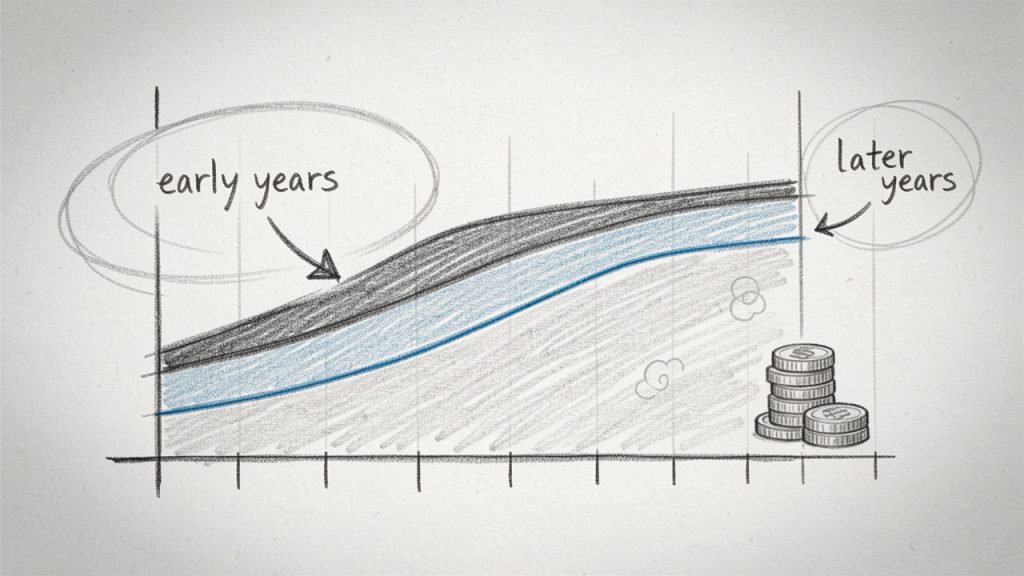
    Amortization chart showing payment composition over time: stacked area or two-line visualization where the interest portion is large at the start and shrinks over time while the principal portion grows. Annotate early years with higher interest share and later years with higher principal share, and label total years on the x-axis.

    Loan term and monthly affordability

    The loan term has a major effect on both monthly payment and total interest paid. A 30-year mortgage usually gives you lower monthly payments, which can ease pressure on your budget. A 15-year mortgage usually comes with higher monthly payments, but you often pay substantially less in interest overall.

    A mortgage calculator makes this trade-off visible. That visibility is valuable because “affordable” can mean two different things. One definition is a lower monthly payment. The other is a lower total borrowing cost. The right choice depends on your income stability, savings goals, and tolerance for fixed expenses.

    Interest rate sensitivity

    Small changes in interest rates can create large changes in total cost. Even a fraction of a percentage point matters. A mortgage calculator lets you run side-by-side scenarios so you can see the effect of a slightly lower or higher rate.

    This becomes especially helpful when deciding whether to lock a rate, improve your credit before applying, or compare lenders more carefully. What looks like a minor difference on paper can translate into major savings over decades.

    Down payment impact

    Your down payment affects multiple parts of the mortgage equation. A larger down payment reduces the loan amount, which lowers monthly principal and interest. It may also help you avoid PMI, depending on the loan structure and lender requirements.

    At the same time, putting more cash down can reduce your liquidity. That matters for entrepreneurs, contractors, and self-employed buyers who may need accessible reserves for business operations or income variability. A mortgage calculator helps you test the balance between lower monthly payments and keeping more cash on hand.

    Taxes, insurance, and the real monthly payment

    One of the biggest mistakes buyers make is focusing only on the advertised mortgage payment. In reality, your housing cost may also include property taxes, homeowners insurance, and sometimes HOA dues. If your loan requires escrow, those costs are often collected monthly along with the mortgage payment.

    A strong mortgage calculator includes these items so the estimate feels closer to real life. This is where many budgets either become sustainable or start to strain. A home that seems manageable on principal and interest alone may feel very different once the full payment is visible.

    Private mortgage insurance and when it matters

    If you make a smaller down payment, particularly below 20 percent in many conventional scenarios, you may need to pay PMI. PMI protects the lender, not the borrower, but the borrower typically pays for it.

    A mortgage calculator that includes PMI gives you a more honest estimate. It can also help you compare whether it makes sense to wait and save a larger down payment or move forward sooner with a smaller one. There is no universal answer. The best decision depends on home prices, rent costs, cash reserves, and your timeline.

    Extra payments and long-term savings

    Many calculators include an option to add extra monthly or annual payments. This feature is more powerful than it looks. Even modest extra payments can reduce total interest and shorten the life of the loan.

    For disciplined savers, this can be a practical strategy. If your income fluctuates, you might commit to the standard payment and make extra payments only in stronger months. A calculator helps you see the possible long-term effect before you commit to that plan.

    A simple comparison of common scenarios

    Scenario Monthly Payment Trend Total Interest Trend Best Fit For
    15-year mortgage Higher Lower Buyers who want faster payoff and can handle larger monthly payments
    30-year mortgage Lower Higher Buyers prioritizing monthly cash flow and flexibility
    Larger down payment Lower Lower Buyers with strong savings who want reduced borrowing costs
    Smaller down payment Higher Higher Buyers who want to purchase sooner and preserve more cash
    Extra monthly payments Slightly higher now Lower later Buyers focused on reducing long-term interest

    How to Get Started with Mortgage calculator

    The best way to use a mortgage calculator is to treat it as a planning tool, not just a one-time estimate. You are not looking for a perfect prediction. You are trying to understand the range of outcomes available to you.

    Start with realistic numbers, not optimistic ones. If you are estimating your future home budget, use a conservative interest rate and include taxes and insurance. If your income varies month to month, base your comfort level on a typical month rather than your highest-earning one.

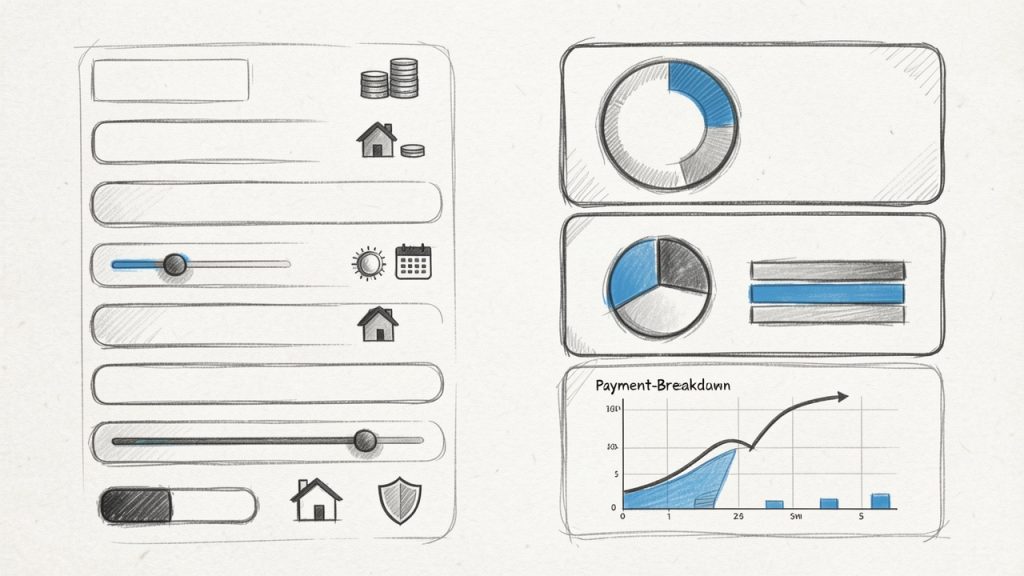
    Clean mortgage calculator interface mockup: inputs on the left (home price, down payment, loan term, interest rate, property tax, homeowners insurance, PMI toggle, HOA fees, extra monthly payment) and results on the right (monthly principal & interest, taxes+insurance+PMI, total monthly payment). Include a small amortization mini-chart and a pie or stacked bar showing the monthly payment breakdown.

    Enter the core numbers first

    Begin with the four basic inputs: home price, down payment, loan term, and interest rate. This gives you the foundation of the monthly mortgage estimate. If you do not yet know the exact interest rate, use a reasonable market estimate and test a slightly higher option too.

    This is where the calculator starts to become useful. Instead of asking, “How much house can I buy?” ask, “What payment can I comfortably carry?” That shift in perspective often leads to smarter decisions. A home price should support your life, not squeeze it.

    Add the full housing costs

    Once you have the basic payment, add property taxes, insurance, and any expected PMI or HOA fees. This creates a truer monthly figure. It is the number your bank account will actually feel.

    This step is essential because buyers often underestimate ownership costs. A mortgage calculator is most valuable when it reflects real conditions, not ideal ones. If a tool allows you to separate principal and interest from total monthly cost, look at both numbers closely.

    Test multiple scenarios

    One estimate is helpful. Three or four estimates are far better. Run different combinations to see how the numbers move. Increase the down payment. Change the term from 30 years to 15. Add a small extra payment. Adjust the interest rate upward.

    A quick scenario test like this can reveal where your leverage is. Sometimes the biggest improvement comes from a better rate. Other times it comes from choosing a lower purchase price or avoiding PMI. The calculator makes these trade-offs visible without pressure.

    Use this simple process

    1. Set your budget ceiling based on a monthly payment you can sustain comfortably.
    2. Enter realistic loan details including down payment, term, and estimated rate.
    3. Include taxes and insurance so the monthly total reflects real ownership cost.
    4. Compare scenarios to find the best balance between affordability and long-term cost.

    Think beyond lender approval

    Lender approval is not the same as personal affordability. A lender may approve a higher amount than you feel comfortable carrying, especially if your income history looks strong on paper. But your mortgage has to fit your actual life, including savings goals, business cycles, childcare, travel, retirement planning, or emergency reserves.

    A mortgage calculator helps you define your own affordability threshold. That is often more important than the maximum amount a lender is willing to offer. The tool gives you a way to set boundaries before outside pressure enters the picture.

    Common mistakes to avoid

    A mortgage calculator is only as useful as the assumptions behind it. One common mistake is forgetting the full monthly cost. Another is choosing a home price first and backing into the payment later. People also tend to assume they will always make extra payments, even if their budget is already tight.

    The better approach is to be conservative. If the payment only works under ideal conditions, it may not truly work. A good estimate leaves room for maintenance, rising insurance costs, and life changes. Homeownership should feel stable, not constantly stretched.

    When to revisit your calculations

    You should rerun your mortgage calculations whenever one of the major variables changes. That might be your credit score, the current interest rate, your down payment savings, or the type of property you are considering. Even a modest change can materially affect your monthly obligation.

    This matters during rate shifts and competitive housing markets. Buyers who revisit the calculator regularly tend to make calmer, more informed choices because they understand the numbers before making an offer.

    Conclusion

    A mortgage calculator is more than a convenience. It is a decision-making tool that helps you understand affordability, compare scenarios, and see the real cost of a home loan before you commit. It brings clarity to one of the biggest financial decisions most people will ever make.

    The next step is practical. Open a mortgage calculator, enter realistic numbers, and test several scenarios based on your budget, not just your ambition. When you can clearly see the monthly payment, the total cost, and the trade-offs between your options, you put yourself in a much stronger position to buy wisely.