
JNTZN

Tag: developers

  • Note-Taking Tools: Capture, Organize, and Retrieve Ideas

    Note-Taking Tools: Capture, Organize, and Retrieve Ideas

    The hardest part of managing ideas is rarely the ideas themselves. It is the friction between capturing them, organizing them, and finding them again when they matter. That is why note taking tools have become essential infrastructure for developers, students, knowledge workers, and anyone trying to operate with less mental clutter and more precision.

    A good note system does more than store text. It becomes an external memory layer, a lightweight project tracker, a reference library, and often a thinking environment. The gap between a quick scratchpad and a structured knowledge base is where most modern note taking tools compete, and where the right choice can change daily workflow more than another messaging app or calendar ever will.

    What are note taking tools?

    Note taking tools are software applications designed to capture, structure, retrieve, and synchronize information across devices and workflows. At the simplest level, they replace paper notebooks and sticky notes. At a more advanced level, they function as personal knowledge management systems, supporting tags, links, databases, templates, collaboration, and automation.

    The category is broad because note taking itself is not a single activity. One user needs a fast place to jot meeting points. Another wants markdown-based documentation for technical work. A third wants a searchable archive of research, clipped web pages, and project decisions. The best note taking tools are built to handle one or more of these jobs without introducing so much complexity that the tool becomes the work.

    For developers, the value is especially clear. Notes often include API references, debugging observations, architecture decisions, sprint planning details, and reusable snippets. In that context, a note taking tool is not just a repository of text. It is part of the development environment, sitting somewhere between documentation, task management, and long-term memory.

    The market has evolved accordingly. Some tools focus on speed and simplicity, offering instant capture and minimal formatting. Others are designed for deep knowledge organization, using backlinks, graph views, or nested structures. Still others emphasize team collaboration, making them suitable for shared project spaces and lightweight internal wikis.

    A useful way to understand the category is to view note taking tools through four functional layers. The first is capture, where information enters the system. The second is organization, where notes are classified or connected. The third is retrieval, where search and navigation determine whether stored information remains useful. The fourth is action, where notes connect to tasks, projects, and decisions. Tools that perform well across all four layers tend to remain valuable over time.
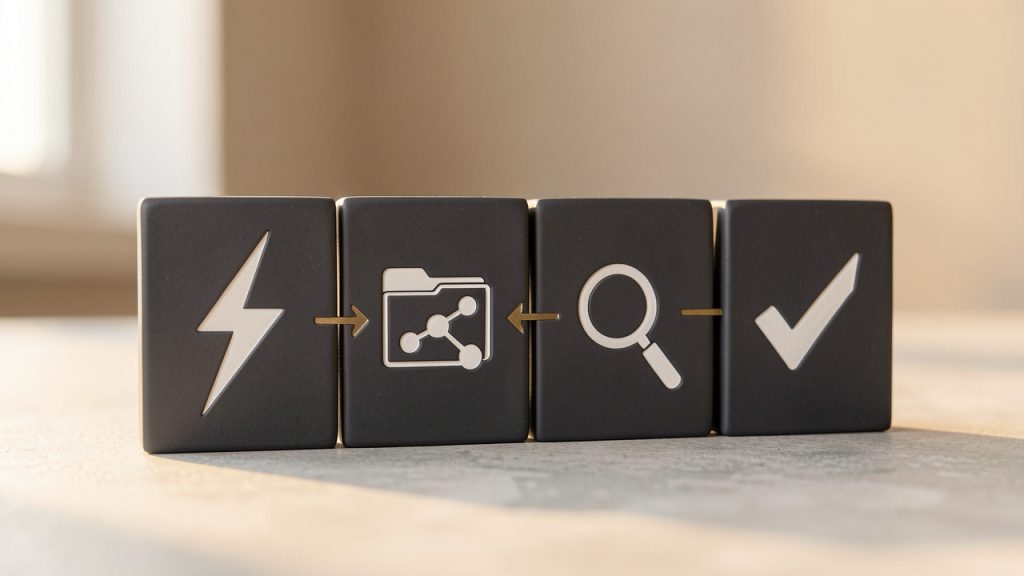
    A clean, simple flow diagram showing the four functional layers as stacked or sequential blocks: Capture -> Organization -> Retrieval -> Action. Each block has a small icon (e.g., lightning bolt for capture, folder/tag/linked nodes for organization, magnifying glass for retrieval, checklist/arrow for action) and arrows indicating information flow between them.

    Key aspects of note taking tools

    Capture speed and low-friction input

    The first quality that separates effective note taking tools from forgettable ones is capture speed. If opening the app, creating a note, and typing the first line takes too long, users default to temporary workarounds. They send themselves messages, open random text files, or trust memory, which usually fails under pressure.

    Fast capture matters because note-taking often happens in unstable contexts. A developer notices an edge case during testing. A manager hears a useful idea in a meeting. A researcher finds a source worth preserving. In each case, the note tool must behave like a reliable buffer between fleeting input and durable knowledge.

    This is why mobile widgets, keyboard shortcuts, browser extensions, voice input, and quick-add commands are not minor features. They directly affect adoption. A tool that supports frictionless intake earns trust because it reduces the delay between thought and storage.

    Organization models and information architecture

    Once notes accumulate, structure becomes more important than formatting polish. Different note taking tools use different organizational models, and each model reflects a theory about how people think. Some rely on folders and subfolders. Others emphasize tags. Some add backlinks and bidirectional relationships, allowing notes to behave more like a graph than a filing cabinet.

    Folders work well when the content has a stable hierarchy, such as client documentation or course materials. Tags are more flexible when information belongs to multiple contexts at once. Linked-note systems are powerful when the goal is idea discovery, synthesis, or long-term knowledge development.

    The trade-off is predictable. The more flexible the structure, the more discipline the user must apply. A rigid folder tree can feel limiting but remains easy to understand. A highly networked note system can be powerful but risks devolving into a web of inconsistent links. The best note taking tools provide enough structure to maintain order while preserving enough freedom to support real work.

    A comparative illustration with three panels: (1) a hierarchical folder tree (filing cabinet) labeled "Folders", (2) a tag cloud with overlapping tags labeled "Tags", and (3) a network graph of interconnected nodes labeled "Backlinks / Graph". Include a small caption under each panel summarizing trade-offs (e.g., "stable hierarchy", "flexible multi-context", "idea discovery").

    Search, retrieval, and resurfacing

    A note that cannot be found is operationally equivalent to a note never taken. That makes retrieval quality one of the most important evaluation criteria. Search should be fast, tolerant of partial memory, and rich enough to filter by title, tag, date, content type, or workspace.

    Advanced retrieval goes further. Some tools support saved searches, backlinks, semantic suggestions, or contextual resurfacing. That matters because users rarely remember where a note lives. They remember fragments, such as a phrase, a meeting date, or the project it was related to. Good retrieval systems are designed around that reality.

    For technical users, search becomes even more critical when notes contain code references, version information, command history, and architecture discussions. In these cases, note taking tools can replace hours of repeated investigation. The ability to locate the exact observation made three weeks ago during debugging is a genuine productivity gain, not a convenience feature.

    Markdown, formatting, and developer friendliness

    Many developers prefer note taking tools that support Markdown, plain text storage, and exportable formats. The reason is not aesthetic. It is about portability, durability, and control. Notes that live in accessible formats are easier to migrate, script, version, and back up.

    Rich text editors appeal to users who value visual formatting and ease of use. They are often better for collaborative documents and polished internal pages. Plain text or markdown-first systems are often better for technical workflows, especially when users want to integrate notes with git repositories, static documentation, or local-first workflows.

    This is one of the clearest fault lines in the category. Some note taking tools behave like document editors. Others behave more like a layer on top of files. Neither approach is universally superior. The better choice depends on whether the priority is presentation, collaboration, customization, or long-term control over data.

    Cross-device sync and offline reliability

    A note system only works if it is available where work happens. That makes cross-device synchronization a baseline requirement for many users. Desktop access is important for deep work. Mobile access matters for capture. Web access can be essential in restricted environments or on shared machines.

    Reliability matters as much as feature breadth. Sync conflicts, slow updates, and partial note loads damage trust quickly. A note taking tool should feel consistent across platforms, especially when users move between laptop, phone, and tablet throughout the day.

    Offline access is similarly important. Notes are often needed while traveling, in low-connectivity spaces, or during outages. Tools that support local caching or local-first storage give users a stronger sense of control and reduce dependence on constant connectivity.

    Collaboration and shared knowledge

    While many note taking tools begin as personal systems, the strongest products increasingly support shared work. Team notes, meeting records, engineering decisions, onboarding guides, and process documentation often benefit from living in a collaborative environment rather than isolated personal notebooks.

    This shifts the requirement set. Collaboration introduces permissions, version history, comments, page sharing, and sometimes database-style structures. The tool must support both clarity and governance. Informal notes can coexist with structured team knowledge, but only if the workspace can scale without becoming chaotic.

    For teams, a note platform often becomes a lightweight wiki. That is particularly useful for fast-moving technical groups that need accessible documentation but do not want the overhead of a formal documentation stack for every internal process. In that space, tools that balance speed with shared structure tend to perform best.

    Security, privacy, and data ownership

    Not all notes are equal. Some are disposable reminders. Others contain confidential business information, research, credentials, or intellectual property. Because of that, security and privacy should not be treated as secondary considerations when evaluating note taking tools.

    Encryption, access controls, compliance posture, and export capability all matter. So does data ownership. Users should understand whether notes are stored locally, in the cloud, or both, and whether they can be exported in usable formats without lock-in. For developers and organizations, this question often determines whether a tool is merely convenient or strategically viable.

    A practical evaluation framework helps. The table below compares the major dimensions that usually matter most.

    Evaluation Area What to Look For Why It Matters
    Capture Quick add, mobile input, browser clipping, shortcuts Reduces friction and improves consistency
    Organization Folders, tags, links, templates, databases Determines long-term scalability
    Search Full-text search, filters, saved queries Makes notes reusable, not just stored
    Format Markdown, rich text, export support Affects portability and editing style
    Sync Fast cross-device updates, offline mode Ensures access everywhere work happens
    Collaboration Shared spaces, comments, permissions Supports teams and project documentation
    Security Encryption, backups, access control Protects sensitive information
    Extensibility Integrations, APIs, automation Connects notes to broader workflows

    Different tools emphasize different strengths. A minimalist app may excel at rapid capture but fall short on collaboration. A workspace platform may be ideal for team documentation but feel heavy for personal thinking. A local-first markdown tool may appeal strongly to developers but require more setup and discipline.

    That is why the best note taking tools are not simply the most feature-rich. They are the ones aligned with the user’s information behavior. The more closely the tool matches the way a person captures, organizes, and retrieves knowledge, the more likely it is to become part of daily workflow.

    How to get started with note taking tools

    Start with use case, not brand

    Many people choose note taking tools by looking at feature checklists or popularity rankings first. That usually leads to avoidable switching later. A better starting point is to define the primary workload. Is the tool meant for quick capture, technical documentation, research organization, meeting notes, or team collaboration?

    This matters because each use case imposes different requirements. A developer maintaining architecture notes may value markdown support, backlinks, and local storage. A manager coordinating meetings may value templates, calendar integration, and sharing. A student may care most about searchable notebooks, annotation support, and cross-device access.

    The first decision should be functional. Once that is clear, vendor choice becomes easier. Instead of asking which app is best in general, the user asks which app is best for this specific operating model.

    Build a small system before building a big one

    A common mistake is over-designing note architecture on day one. Users create elaborate folder structures, complex tagging taxonomies, and nested templates before they have enough real notes to understand what structure is needed. The result is maintenance overhead without practical benefit.

    A better method is to begin with a simple operating structure and let patterns emerge. One notebook for active work, one for reference, and one for archive is often enough to start. Tags can be added later when repeated themes become clear. Links can emerge naturally as knowledge grows. This incremental approach prevents the tool from becoming a classification project.

    For many users, successful adoption depends less on the perfect structure and more on a stable routine. The goal is not to build a museum of notes. The goal is to create a system that gets used consistently under real conditions.

    Use templates where repetition exists

    Templates are one of the most practical features in modern note taking tools, especially for recurring workflows. Meeting notes, sprint retrospectives, daily logs, research summaries, bug reports, and one-on-one agendas all benefit from standardized structure.

    The benefit is not just speed. Templates improve note quality by reducing omission. A meeting template can prompt decisions, owners, and deadlines. A debugging template can prompt reproduction steps, observed behavior, attempted fixes, and final resolution. Over time, this consistency makes notes easier to search and compare.

    For technical teams, templates also improve institutional memory. Repeated formats create stable records. They help turn notes from private fragments into reusable operational assets.

    Connect notes to workflow, not just storage

    Many note collections fail because they remain disconnected from action. Notes are taken, saved, and forgotten. The strongest systems connect note taking tools to ongoing work, which means tying them to tasks, projects, calendars, repositories, or team processes.

    A project note should contain context, decisions, next steps, and relevant links. A meeting note should lead to action items. A research note should connect to related topics or implementation plans. When notes remain linked to execution, they become a living system rather than passive storage.

    This is also where integrated workspaces can help. A platform such as Home can be useful when users want note capture and organization to sit closer to daily operations instead of living in an isolated app. When notes, references, and active work exist in the same environment, context switching drops and information becomes easier to act on.

    Review and prune regularly

    A note system that only accumulates will eventually become noisy. Regular review keeps the signal strong. This does not require aggressive deletion. It means archiving stale material, merging duplicates, and elevating high-value notes into more permanent reference pages.

    A lightweight review cycle often works best. Weekly review can focus on active notes and unfinished ideas. Monthly review can focus on structure, taxonomy, and archives. This creates a feedback loop where the note taking tool continues to reflect current priorities rather than becoming a pile of digital sediment.

    The following sequence is enough for most users starting from scratch:

    1. Define the primary use case for the note system.
    2. Choose one tool that matches that workflow instead of testing many at once.
    3. Create a minimal structure with only a few top-level categories.
    4. Capture notes daily and review patterns after two to four weeks.
    5. Add templates or tags only where repetition clearly exists.

    This approach works because it avoids premature optimization. It lets real usage shape the system, which is usually more durable than trying to predict every category in advance.

    Compare tool types before committing

    The category becomes easier to navigate when viewed by operating style rather than by individual product names. The table below summarizes the main patterns.

    Tool Type Typical Strength Common Limitation Best For
    Minimalist note apps Fast capture, low complexity Limited structure and collaboration Personal reminders, quick notes
    Markdown-first tools Portability, developer control, extensibility Higher setup friction Developers, technical documentation
    Workspace-style platforms Collaboration, databases, shared knowledge Can feel heavy for simple note taking Teams, project hubs, internal wikis
    Research-focused tools Clipping, annotation, source organization Less suited to general task flow Students, researchers, analysts
    Local-first tools Privacy, offline access, ownership Variable sync and sharing maturity Privacy-conscious users, power users

    Choosing between these types is often more important than choosing between brands inside the same type. Once a user identifies the operating model that fits, the field narrows quickly.

    Conclusion

    The best note taking tools do not just help people write things down. They reduce cognitive load, preserve context, and make information usable across time. That requires more than a clean editor. It requires effective capture, scalable organization, reliable search, strong sync, and enough flexibility to match the way real work unfolds.

    For developers and efficiency-focused users, the right note taking tool often becomes part of the core stack. The smartest next step is simple: identify the main use case, choose one tool that fits it, and build a small system that can survive daily use. If the goal is to connect notes more closely with actual work, collaborative context, and organized execution, exploring a workspace like Home can be a practical place to start.


  • Time Management Tools: Protect Focus and Boost Output

    Time Management Tools: Protect Focus and Boost Output

    Time disappears fastest when work is fragmented. A few messages, a calendar alert, an unfinished task, a context switch, and suddenly a full afternoon has been consumed without meaningful progress. That is exactly why time management tools matter. They do not create more hours, but they make hours more visible, structured, and defensible.

    A visual of a single afternoon being eaten by many small interruptions: floating icons for chat messages, email alerts, a calendar notification, a half-finished task sticky note, and a developer looking distracted while the clock hands spin quickly. The composition should convey that fragmented, small events aggregate into a large loss of focused time.

    For developers and efficiency-focused professionals, the problem is rarely a lack of ambition. It is usually a systems problem. Work arrives from multiple channels, priorities shift in real time, and deep focus competes with meetings, support requests, and administrative overhead. The right toolset turns this chaos into an operable workflow, creating a layer between intention and distraction.

    This article examines what time management tools are, how they function in practice, which categories matter most, and how to adopt them without building a complicated productivity stack that becomes another source of friction. The objective is not to recommend more software for its own sake. It is to show how to use tools to protect attention, reduce task drift, and improve output quality over time.

    What is Time management tools?

    Time management tools are systems, applications, and interfaces designed to help individuals plan, allocate, track, and optimize how time is used. At a basic level, they help answer four operational questions: what needs to be done, when it should be done, how long it should take, and whether time was actually spent as intended.

    In practical terms, the category includes task managers, digital calendars, project planning platforms, focus timers, habit trackers, time trackers, scheduling assistants, and automation tools. Some tools are lightweight, built for personal use and rapid capture. Others are designed for teams, where time management intersects with resource planning, sprint velocity, delivery forecasting, and workload balancing.

    The phrase itself can sound broad because it is broad. A calendar is a time management tool. So is a Kanban board. So is a Pomodoro timer. So is software that logs application usage and reveals that “quick checks” of email consumed ninety minutes. What unifies them is not form factor, but function. Each tool attempts to bring structure, visibility, and control to time use.

    For technical professionals, the category has an additional layer. Time management is not only about scheduling. It is also about cognitive load management. A developer may need long uninterrupted blocks for architecture work, shorter windows for code review, and explicit boundaries around communication channels. In that context, time management tools become less about rigid planning and more about protecting the conditions required for high-quality work.

    Why the concept matters now

    Modern work environments reward responsiveness, but meaningful progress often depends on the opposite. Deep work requires latency. Good problem solving needs uninterrupted sequences of thought. Without deliberate tooling, the default environment pushes toward reactive behavior, where urgency displaces importance.

    That is why many people adopt time management tools after a failure point. Deadlines slip. Task lists become unreliable. Meetings consume planned execution time. Or personal energy becomes inconsistent because every day feels improvised. The tool is then not a luxury, but a control mechanism.

    Used well, these tools create a feedback loop. Planning improves execution. Execution produces tracking data. Tracking data reveals misestimation, bottlenecks, and distraction patterns. That information then improves future planning. Over time, the user shifts from guessing to managing.

    Key Aspects of Time management tools

    Visibility into commitments

    The first major function of a time management tool is visibility. Many productivity problems are not caused by laziness or poor discipline. They are caused by hidden commitments. Work exists in inboxes, chat threads, issue trackers, personal notes, and memory. If obligations are distributed across too many places, prioritization becomes unreliable.

    A funnel or hub-and-spoke diagram showing multiple sources (email, chat, issue tracker, personal notes, meetings) feeding into a single central dashboard that displays a combined view of tasks, deadlines, and calendar blocks. Emphasize that the central view enables prioritization and reduces hidden commitments.

    A strong tool centralizes what matters. It does not need to hold every artifact, but it should serve as the authoritative layer where tasks, deadlines, and time blocks can be reviewed together. This is where digital calendars and task managers become foundational. One shows when time is already allocated. The other shows what still competes for that time.

    When visibility improves, decision quality improves. It becomes easier to identify overload early, defer low-value work, and avoid the common mistake of assuming open calendar space means available cognitive capacity. Those are not the same thing.

    Prioritization and sequencing

    Not all time management tools are equal in how they handle priority. Some are excellent for capture but weak in sequencing. Others support dependencies, due dates, tags, effort estimates, and status transitions. The right choice depends on whether the user needs simple personal organization or structured workflow control.

    For developers, prioritization often has hidden complexity. A task may look small but require setup time, environment context, or coordination with another team. Good tools support more than deadlines. They help separate urgent, important, blocked, and optional work. They also make sequencing easier by showing what should happen next, not just what exists in the backlog.

    This distinction matters. A long unsorted task list creates anxiety, not execution. Effective time management tools reduce ambiguity by narrowing focus. Instead of presenting fifty open items, they help surface the two or three that deserve the next available block of concentration.

    Time blocking and calendar integration

    One of the most effective applications of time management tools is time blocking, the practice of assigning work to actual periods on the calendar rather than leaving it as abstract intention. This is often where productivity systems become real. A task on a list is a possibility. A task assigned to 10:00 to 11:30 is a commitment.

    Calendar-based planning forces realism. It exposes whether workload actually fits inside available time. It also creates friction against overcommitting. Many professionals discover that their problem is not underperformance, but systematic overplanning. They schedule eight hours of focused work into a day that contains three meetings, multiple interruptions, and unavoidable operational tasks.

    Tools that synchronize tasks and calendar events are particularly useful because they bridge planning and execution. This is also an area where an integrated workspace like Home can be valuable, especially for users who want planning, scheduling, and personal workflow structure in one environment instead of spread across disconnected apps.

    Tracking actual time versus estimated time

    Planning alone is incomplete without measurement. That is why time tracking is one of the most important, and often most misunderstood, categories of time management tools. Tracking is not only for freelancers billing clients or managers monitoring utilization. It is also a diagnostic tool for personal accuracy.

    Many people consistently underestimate how long tasks take. Others fail to account for startup costs, interruptions, and recovery time after context switching. Time tracking reveals these patterns. It helps answer whether recurring work is truly routine, whether meetings generate hidden follow-up overhead, and whether certain parts of the day produce better output than others.

    For technical work, this can be especially useful. Debugging, refactoring, investigation, and performance optimization rarely fit neat estimates. Tracking actual time spent can improve sprint planning, reduce unrealistic commitments, and create more credible future forecasts.

    Focus support and distraction control

    A large segment of time management tools is built around a simple truth, unmanaged attention makes planning irrelevant. A perfect calendar does not help if the planned hour is lost to notifications, tab switching, or passive communication loops.

    Focus tools address this by creating boundaries. Some use timers, such as Pomodoro-based applications. Others block distracting websites, mute notifications, or provide session analytics. The goal is not to gamify concentration, but to reduce the number of times the brain is asked to re-enter a task after interruption.

    This matters because context switching carries a real cost. For developers, that cost can be severe. Rebuilding working memory after interruption takes time and degrades quality. A time management tool that protects uninterrupted sessions may therefore be more valuable than one with a long feature list but no practical support for focus.

    Automation and recurring workflows

    Advanced time management becomes more efficient when routine actions are automated. Repeating reminders, recurring task templates, scheduled reviews, and meeting buffers all reduce the need for manual maintenance. Good tools do not just store plans, they help operationalize them.

    Automation is especially effective for recurring responsibilities that tend to be forgotten because they are small, not because they are unimportant. Weekly planning, code review follow-ups, invoice deadlines, learning sessions, or maintenance tasks benefit from systems that regenerate them automatically. This lowers cognitive overhead and increases consistency.

    The best setups often feel almost invisible. They surface work at the right time, preserve default structures, and reduce decision fatigue. That is a stronger outcome than a feature-rich tool that requires constant upkeep.

    Team coordination versus personal execution

    A common mistake is using one tool to solve two very different problems. Team project platforms optimize for shared visibility, dependencies, assignments, and status reporting. Personal time management tools optimize for focus, scheduling, and day-level execution. Sometimes one product handles both reasonably well. Often, it does not.

    This is why professionals frequently maintain a layered system. Team obligations live in a project management platform. Personal execution happens in a task manager or calendar environment that translates shared commitments into individual time blocks. The separation is useful because project status is not the same as daily actionability.

    A developer may be assigned five tickets in a sprint board, but still need a personal system to decide which one enters the next focus block, how much time to reserve, and when administrative work should happen around it. Time management tools are most effective when that distinction is explicit.

    Comparing common categories of time management tools

    The market is crowded, but most products fall into a small number of operational categories. The comparison below clarifies what each category does best.

    Tool Category Primary Function Best For Limitation
    Task Managers Capture, organize, and prioritize tasks Personal workflows, daily planning, follow-ups Weak if not linked to calendar reality
    Calendars Schedule time-bound events and work blocks Time blocking, meetings, deadline visibility Does not manage backlog complexity well
    Project Management Platforms Coordinate tasks across teams Shared projects, dependencies, progress tracking Can become too heavy for personal execution
    Time Trackers Measure actual time spent Estimation accuracy, billing, productivity analysis Tracking without review creates noise
    Focus Tools Protect attention during work sessions Deep work, distraction control, session discipline Limited value without clear priorities
    Automation Tools Reduce repetitive planning/admin work Recurring tasks, reminders, workflow consistency Poor setup can create silent failure points

    The important point is not to adopt one of everything. It is to identify which operational gaps actually exist. If the problem is forgotten tasks, a timer will not solve it. If the problem is distraction, a better backlog view may not help enough. Tool choice should follow failure mode.

    How to Get Started with Time management tools

    Start with the bottleneck, not the feature list

    Most failed productivity systems begin with enthusiasm and collapse under complexity. The user installs multiple apps, creates tags and categories, imports goals, watches tutorials, and then abandons the setup within two weeks because maintenance becomes a second job.

    A better starting point is to define the bottleneck. Is work being forgotten? Is too much work being accepted? Are priorities unclear? Is focus constantly interrupted? Is task duration consistently underestimated? A good implementation begins with one concrete problem and one corresponding tool capability.

    If someone misses deadlines because tasks are scattered across email and chat, the first need is a trusted capture and task management layer. If someone knows what to do but never finds uninterrupted time, the first need is calendar blocking plus distraction control. This diagnostic approach prevents overbuilding.

    Build a minimal stack

    A minimal stack is usually enough for most professionals. In many cases, a strong combination is one task manager, one calendar, and one method for focused execution. Additional layers should only be added when they solve a known problem.

    A practical starter stack often includes the following elements:

    1. Task Manager for capturing and prioritizing work.
    2. Calendar for assigning time blocks and reviewing commitments.
    3. Focus Method such as timed sessions or notification control.
    4. Optional Tracker for measuring actual time if estimates are unreliable.

    This setup is intentionally restrained. The objective is to create a working system that survives real life, not an idealized dashboard that looks impressive and fails under pressure.

    Define a workflow before customizing

    Tools perform best when attached to a clear workflow. Without one, even excellent software becomes a storage container for good intentions. A simple workflow might look like this: capture all incoming tasks in one place, review and prioritize them daily, assign top tasks to calendar blocks, execute during focus sessions, and review actual progress at the end of the day.

    That sequence matters because it turns productivity from aspiration into process. The software supports the process, but does not replace it. This is where many users go wrong. They expect the application to create discipline automatically. In reality, the tool amplifies whatever workflow already exists, whether disciplined or chaotic.

    For users who want a more unified environment, Home can help reduce fragmentation by bringing daily planning and execution into a single operational space. That matters because fewer system boundaries usually mean less friction and better follow-through.

    Use estimates carefully

    Time estimates are useful, but only when treated as operational signals rather than promises. A developer may estimate a feature task at ninety minutes, then discover that environment setup, dependency issues, and edge case testing expand it to three hours. This does not mean estimation is pointless. It means estimates should be revisited using real tracking data.

    A practical approach is to estimate in broad ranges first. Short, medium, and deep-work tasks are often easier to classify than assigning exact minutes. Once patterns emerge, estimates become more accurate. This helps with both personal planning and team communication.

    The goal is not perfect precision. It is reduced surprise. Better estimates lead to better calendars, fewer missed commitments, and more realistic daily plans.

    Create review loops

    A time management tool becomes valuable only when it is reviewed consistently. Without review, task lists decay, calendars fill reactively, and tracking data remains unused. Review is the maintenance layer that keeps the system credible.

    Daily review should be brief. It checks today’s commitments, identifies the top priorities, and ensures the calendar reflects actual intention. Weekly review is more strategic. It examines overdue work, recurring bottlenecks, unfinished priorities, and upcoming constraints. This is also where the user can decide whether the tool setup still matches current workload.

    These reviews are not administrative overhead in the negative sense. They are control points. They prevent drift. They also convert the tool from passive repository into active management system.

    Avoid common implementation errors

    Several patterns repeatedly undermine adoption. One is using too many tools at once. Another is storing tasks in multiple places without a clear system of record. A third is creating highly detailed plans that collapse the first time the day changes. Overengineering is often just procrastination wearing a technical disguise.

    Another common error is measuring too much without acting on the data. Tracking every minute can feel productive, but if the information is never reviewed, it becomes surveillance rather than insight. The same applies to tags, labels, and project structures that are too granular to sustain.

    The most durable systems are slightly boring. They are predictable, easy to maintain, and clear under stress. That is a feature, not a flaw.

    A practical selection framework

    When evaluating time management tools, it helps to compare them against real operational criteria rather than marketing language.

    Evaluation Factor What to Look For Why It Matters
    Capture Speed Fast task entry on desktop and mobile Friction causes tasks to stay in memory or get lost
    Calendar Integration Two-way sync or easy time blocking Planning improves when tasks meet real time constraints
    Review Usability Clear dashboard, filters, or today view A system that is hard to review will not be maintained
    Focus Support Timers, notification controls, session modes Good planning fails without protected execution time
    Automation Recurring tasks, reminders, templates Reduces repetitive setup and improves consistency
    Scalability Works for both light and busy weeks A tool should not break when workload changes

    This framework is intentionally functional. The right choice is the one that supports execution with the least friction, not the one with the largest feature inventory.

    Conclusion

    Time management tools are most effective when they solve a specific coordination problem between intention, attention, and execution. They help make work visible, translate priorities into time, reveal where hours actually go, and create boundaries around focus. For developers and efficiency-minded professionals, that means fewer lost tasks, better estimates, and more reliable progress on demanding work.

    The next step is simple. Identify the single point where time currently leaks the most, then choose one tool or one integrated environment to address it. Build a small system, review it regularly, and let data refine the process. Better time management is rarely the result of trying harder. More often, it is the result of using the right structure consistently.