

Online SEO tools free refers to a category of browser-based utilities that help analyze, monitor, and improve search visibility without requiring a paid subscription.
For developers, marketers, and solo operators, these tools function as lightweight diagnostics for the web stack, exposing issues in metadata, crawlability, content structure, performance, and keyword alignment before they become expensive problems.
The practical appeal is straightforward. A site can be audited, benchmarked, and iterated on without purchasing enterprise software, and that matters when the workflow is already fragmented across deployment, analytics, content management, and release cycles.
Used correctly, free SEO tools do not replace a full optimization stack, but they provide enough signal to prioritize fixes, validate assumptions, and keep a project moving with minimal overhead.
What is Online SEO tools free?
Online SEO tools free is best understood as a utility layer for search optimization.
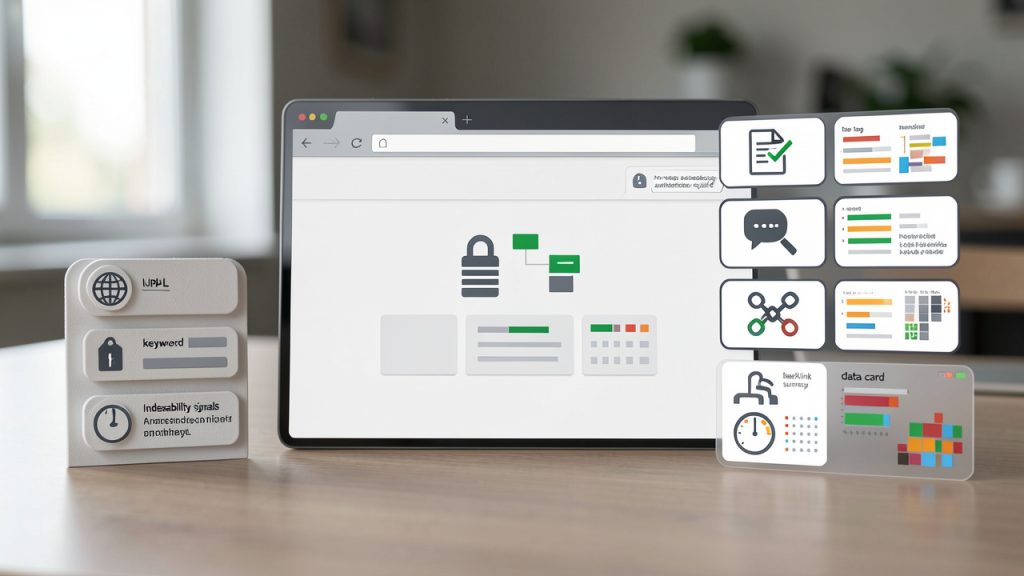
The tools usually run in a browser, accept a URL, keyword, or snippet of page content, and return structured output such as title tag checks, meta description analysis, heading inspection, indexability signals, backlink summaries, or performance metrics.
At a functional level, these tools behave like lightweight observability endpoints for public web pages. They are not the product itself, but the diagnostic interface around it, similar to how developer tools inspect DOM state, network requests, and rendering issues without modifying the underlying application.
For smaller teams, this category is especially valuable because it lowers the barrier to entry. A new site, landing page, documentation portal, or content hub can be checked quickly, often without authentication, integration work, or onboarding overhead.
That speed is useful when the goal is to verify whether a page is technically ready to rank, not to run a full-scale enterprise SEO program.
Key Aspects of Online SEO tools free
Accessibility and low-friction usage
The strongest characteristic of free online SEO tools is accessibility. A user can open a browser, paste a URL, and receive actionable diagnostics in seconds.
That makes them ideal for fast iteration, especially during content publishing, QA, or pre-launch review. The low-friction model also fits distributed workflows. A developer may validate canonical tags, while a content writer checks keyword placement, and a site owner reviews performance, all without provisioning separate accounts or connecting internal systems.
In practice, the tools can be inserted into almost any workflow with near-zero setup cost.
Technical visibility into page health
Most free SEO tools focus on the visible and machine-readable layers of a page. They inspect elements such as title tags, meta descriptions, heading hierarchy, image alt text, internal links, and robots directives.
Some also surface schema markup issues, broken links, or duplicate content signals.
This matters because search engines do not evaluate pages by content alone. They also process structure, semantics, and crawl instructions. A well-written page can still underperform if the HTML is fragmented, metadata is missing, or the internal linking model is weak.
Performance and user experience signals
Many online SEO tools free include page speed and usability checks, which are increasingly relevant to rankings and conversions.
A slow page can create a bad first impression, even if the content is strong, because search visibility and user retention are tightly connected.
From a technical perspective, these checks help identify rendering bottlenecks, oversized assets, and inefficient delivery patterns. That can lead to specific fixes such as compressing images, deferring scripts, reducing layout shifts, and optimizing caching behavior. The value is not just ranking support, but improved application efficiency overall.
Keyword and content alignment
Free keyword tools help evaluate intent, relevance, and search language. They can identify phrases people actually search for, compare variations, and estimate whether content is aligned with a target topic.
This is where many teams gain leverage. Instead of guessing what a page should rank for, they can examine query patterns and position the page around a realistic semantic cluster. For developers building documentation, SaaS pages, or blog content, that alignment often determines whether a page attracts qualified traffic or remains invisible.
Backlink and authority checks
Some free tools offer partial backlink analysis or domain authority style metrics. While these are more limited compared with paid platforms, they still provide directional insight into visibility and reputation.
The primary use case is comparative, not definitive. Teams can estimate how a domain stacks up against competitors, identify obvious link opportunities, or notice whether a new site has any external signals at all. Even a basic backlink view can help shape outreach strategy and content prioritization.
Limitations and trade-offs
Free tools are useful but they come with constraints. They often limit the number of daily checks, restrict historical data, or simplify metrics that paid platforms calculate in more depth. Some also refresh slower or provide fewer export options.
The main trade-off is precision versus speed. Free tools are excellent for directional analysis and first-pass auditing, but they are not designed for large-scale reporting, deep competitor intelligence, or automated monitoring across dozens of properties. A mature SEO workflow usually combines them with analytics, log data, and crawl-based tooling.
How to Get Started with Online SEO tools free
Identify the immediate objective
Before choosing a tool, define the operational goal. The right utility depends on whether the page needs a metadata audit, a speed review, a keyword check, or a backlink snapshot. Trying to use one tool for every task usually produces shallow results.
A practical approach is to start from the page lifecycle. If content is not yet published, the priority is on-page structure and keyword fit. If the page is live, the priority shifts toward technical health, indexing signals, and traffic behavior. If traffic exists but conversion is weak, usability and performance checks become more important.
Use a simple evaluation sequence
A repeatable sequence helps avoid random tool-hopping, and it makes the workflow more efficient.
- Check the page structure: Confirm title tags, headings, and meta descriptions.
- Validate technical signals: Review canonical tags, robots instructions, and indexability.
- Inspect content relevance: Compare the page against the target keyword and search intent.
- Review speed and usability: Test load behavior, mobile responsiveness, and core performance indicators.
This sequence works because it moves from static structure to dynamic experience. That mirrors how search engines and users both encounter a page.

Compare tools by output, not branding
Many free SEO tools look similar at the surface, but the output quality varies. The most useful ones produce clear, specific findings rather than vague scores. A page audit that says “improve SEO” is less valuable than one that identifies a missing canonical, duplicate heading, or oversized image payload.
When evaluating options, the core question is whether the output can support a decision. If the result can be turned into a ticket, a content revision, or a deployment fix, the tool is doing useful work.
| Evaluation Criterion | What to Look For | Why It Matters |
|---|---|---|
| Actionability | Specific findings, not generic grades | Reduces time from diagnosis to fix |
| Scope | Technical, content, or performance focus | Ensures the tool matches the task |
| Limits | Check quotas, exports, and crawl depth | Prevents workflow disruption |
| Clarity | Clean interface and readable reporting | Speeds up review across teams |
Integrate with existing workflows
Free SEO tools are most effective when they are attached to a process. That can be as simple as a pre-publish checklist in the CMS, a QA step before deployment, or a recurring audit for high-value pages.
For teams already using a dashboard or workspace, the goal is to centralize the output. Consolidating checks, tasks, and page-level priorities in one place reduces context switching, which is often the hidden cost in SEO operations.
Avoid false confidence
A free tool can surface a problem, but it cannot always explain the root cause. For example, a slow page may be due to image size, JavaScript execution, third-party scripts, or server response time. The tool may point to the symptom, while deeper debugging still requires inspection.
Treat SEO tools as signals, not final answers. Use them to narrow the search space, then confirm the issue with browser tools, analytics, server logs, or code review when necessary. This approach is more reliable than accepting the first metric at face value.
When free tools are enough, and when they are not
Free online SEO tools are often enough for single-site owners, small teams, or developers managing a limited number of pages. They are especially effective for audits, quick validation, and early-stage optimization. If the site is small and the task is tactical, free tools can cover a surprising amount of ground.
They become less sufficient when the operation scales. Large content libraries, competitive markets, and multi-domain environments usually need more automation, historical context, and deeper reporting. At that point, free tools can remain part of the stack, but they should no longer be the only source of truth.
A useful rule is to keep free tools for discovery and first-pass checks, then supplement them with analytics, rank tracking, log analysis, or paid crawlers when the business case justifies it. That balance keeps the workflow lean without sacrificing accuracy.
Common mistakes when using free SEO tools
One common mistake is over-optimizing for the score. A high score does not always mean the page is competitive, useful, or aligned with intent. Search performance depends on more than tool-generated metrics, so the output should be read as guidance, not a finish line.
Another mistake is ignoring content quality because the technical audit looks clean. SEO is not just indexing and metadata. If the page fails to answer the query better than competing pages, technical perfection will not compensate.
A third error is treating every tool as interchangeable. Some are better for crawl analysis, some for snippets, some for performance, and some for keywords. Using the wrong utility creates noise, not clarity.
Building an efficient SEO workflow with free tools
A practical SEO workflow should resemble a lightweight engineering pipeline. First, define the target page or query. Then run a technical check, followed by keyword and content review, then performance inspection, and finally a validation pass after changes are deployed.
The advantage of this model is repeatability. Instead of making ad hoc decisions, the team develops a consistent method for diagnosing and improving pages. That consistency matters because SEO work accumulates over time, and inconsistent processes usually create fragmented results.
For developers, this approach is particularly efficient when tied to release cycles. A landing page, article, or documentation update can be checked before deployment, reviewed after indexing, and rechecked if traffic or rankings fail to move as expected. That keeps optimization close to the code and close to the content, where the actual changes happen.
Conclusion
Online SEO tools free provide a practical, low-cost entry point into search optimization. They help expose technical issues, assess content alignment, and surface performance bottlenecks without requiring heavy setup or immediate investment.
Used well, they function as the diagnostic layer that keeps SEO work organized and efficient. The next step is to choose one page, one goal, and one free tool category, then build a repeatable review process around it. Start small, verify the output against the actual page state, and expand only when the workflow demands more depth.