

A home purchase can look affordable right up until the monthly payment appears on screen. That is the moment many buyers realize the sale price is only part of the story. Interest, taxes, insurance, down payment, and loan term all shape what you will actually pay each month, and over the life of the loan, the difference can be enormous.
That is why a mortgage calculator is one of the most useful financial tools available online. It turns a vague idea like “Can I afford this house?” into a clearer, more practical answer. For small business owners, freelancers, developers, and anyone who values efficient decision-making, a good mortgage calculator saves time, reduces guesswork, and helps you plan with more confidence.
What is Mortgage calculator?
A mortgage calculator is a tool that estimates the cost of financing a home. At its simplest, it uses the loan amount, interest rate, and repayment term to show your expected monthly payment. More advanced versions include property taxes, homeowners insurance, PMI, HOA fees, and even extra monthly payments.
The reason this tool matters is simple. A mortgage is not just a single price tag. It is a long-term financial commitment made up of many moving parts. A mortgage calculator helps you see those parts together, so you can understand both your monthly obligation and the total cost over time.
For many buyers, the calculator acts like a reality check. You may discover that a slightly smaller loan with a larger down payment creates a much more comfortable budget. Or you may learn that a lower interest rate saves tens of thousands of dollars over the life of the mortgage. Those are not abstract differences. They affect cash flow, savings goals, and financial flexibility for years.
This is especially important if your income is variable. Freelancers and business owners often have uneven monthly revenue, which makes fixed obligations feel heavier during slower periods. A mortgage calculator helps you model a payment that fits not just your best months, but your average and leaner months too.
What a mortgage calculator typically includes
Most mortgage calculators center on a few core inputs. The home price is the purchase price of the property. The down payment reduces how much you need to borrow. The loan term is commonly 15 or 30 years, and the interest rate determines how much you pay to borrow the money.
More complete calculators also estimate the full monthly housing cost. That often includes property taxes, homeowners insurance, and PMI if your down payment is below a certain threshold. This broader view matters because borrowers often focus on principal and interest alone, while the true monthly cost is higher.
Why this tool matters before you apply
Using a mortgage calculator before speaking with a lender gives you a stronger starting point. You can test different purchase prices, compare loan terms, and understand how much room you have in your budget. That makes conversations with lenders more productive because you are not starting from zero.
It also helps prevent emotional decisions. Real estate shopping can become aspirational very quickly. A calculator introduces discipline. It translates excitement into numbers, and numbers are much better at protecting your long-term financial health.
Key Aspects of Mortgage calculator
A useful mortgage calculator does more than produce a monthly payment. It reveals how borrowing works over time. Once you understand the key moving parts, you can use the tool to make smarter decisions rather than simply generating estimates.
Principal and interest
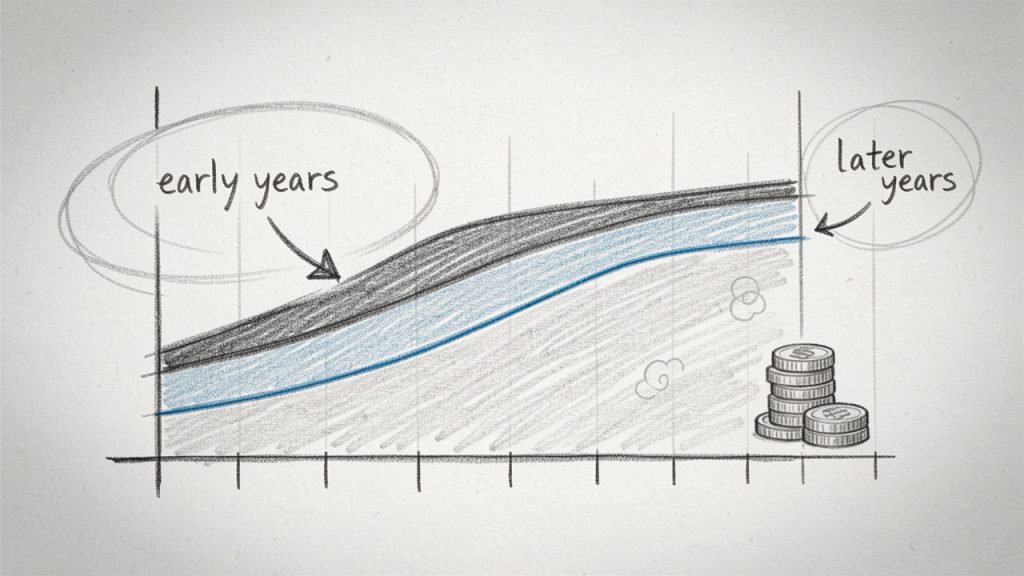
The basic mortgage payment is made up of principal and interest. Principal is the amount you borrowed. Interest is what the lender charges you for that loan. In the early years of many mortgages, a larger share of your payment goes toward interest rather than principal.
This surprises a lot of first-time buyers. A calculator can show the amortization effect, which is the shifting balance between interest and principal over time. Seeing that breakdown helps you understand why making extra payments early in the loan can have a meaningful impact.
Loan term and monthly affordability
The loan term has a major effect on both monthly payment and total interest paid. A 30-year mortgage usually gives you lower monthly payments, which can ease pressure on your budget. A 15-year mortgage usually comes with higher monthly payments, but you often pay substantially less in interest overall.
A mortgage calculator makes this trade-off visible. That visibility is valuable because “affordable” can mean two different things. One definition is a lower monthly payment. The other is a lower total borrowing cost. The right choice depends on your income stability, savings goals, and tolerance for fixed expenses.
Interest rate sensitivity
Small changes in interest rates can create large changes in total cost. Even a fraction of a percentage point matters. A mortgage calculator lets you run side-by-side scenarios so you can see the effect of a slightly lower or higher rate.
This becomes especially helpful when deciding whether to lock a rate, improve your credit before applying, or compare lenders more carefully. What looks like a minor difference on paper can translate into major savings over decades.
Down payment impact
Your down payment affects multiple parts of the mortgage equation. A larger down payment reduces the loan amount, which lowers monthly principal and interest. It may also help you avoid PMI, depending on the loan structure and lender requirements.
At the same time, putting more cash down can reduce your liquidity. That matters for entrepreneurs, contractors, and self-employed buyers who may need accessible reserves for business operations or income variability. A mortgage calculator helps you test the balance between lower monthly payments and keeping more cash on hand.
Taxes, insurance, and the real monthly payment
One of the biggest mistakes buyers make is focusing only on the advertised mortgage payment. In reality, your housing cost may also include property taxes, homeowners insurance, and sometimes HOA dues. If your loan requires escrow, those costs are often collected monthly along with the mortgage payment.
A strong mortgage calculator includes these items so the estimate feels closer to real life. This is where many budgets either become sustainable or start to strain. A home that seems manageable on principal and interest alone may feel very different once the full payment is visible.
Private mortgage insurance and when it matters
If you make a smaller down payment, particularly below 20 percent in many conventional scenarios, you may need to pay PMI. PMI protects the lender, not the borrower, but the borrower typically pays for it.
A mortgage calculator that includes PMI gives you a more honest estimate. It can also help you compare whether it makes sense to wait and save a larger down payment or move forward sooner with a smaller one. There is no universal answer. The best decision depends on home prices, rent costs, cash reserves, and your timeline.
Extra payments and long-term savings
Many calculators include an option to add extra monthly or annual payments. This feature is more powerful than it looks. Even modest extra payments can reduce total interest and shorten the life of the loan.
For disciplined savers, this can be a practical strategy. If your income fluctuates, you might commit to the standard payment and make extra payments only in stronger months. A calculator helps you see the possible long-term effect before you commit to that plan.
A simple comparison of common scenarios
| Scenario | Monthly Payment Trend | Total Interest Trend | Best Fit For |
|---|---|---|---|
| 15-year mortgage | Higher | Lower | Buyers who want faster payoff and can handle larger monthly payments |
| 30-year mortgage | Lower | Higher | Buyers prioritizing monthly cash flow and flexibility |
| Larger down payment | Lower | Lower | Buyers with strong savings who want reduced borrowing costs |
| Smaller down payment | Higher | Higher | Buyers who want to purchase sooner and preserve more cash |
| Extra monthly payments | Slightly higher now | Lower later | Buyers focused on reducing long-term interest |
How to Get Started with Mortgage calculator
The best way to use a mortgage calculator is to treat it as a planning tool, not just a one-time estimate. You are not looking for a perfect prediction. You are trying to understand the range of outcomes available to you.
Start with realistic numbers, not optimistic ones. If you are estimating your future home budget, use a conservative interest rate and include taxes and insurance. If your income varies month to month, base your comfort level on a typical month rather than your highest-earning one.
Enter the core numbers first
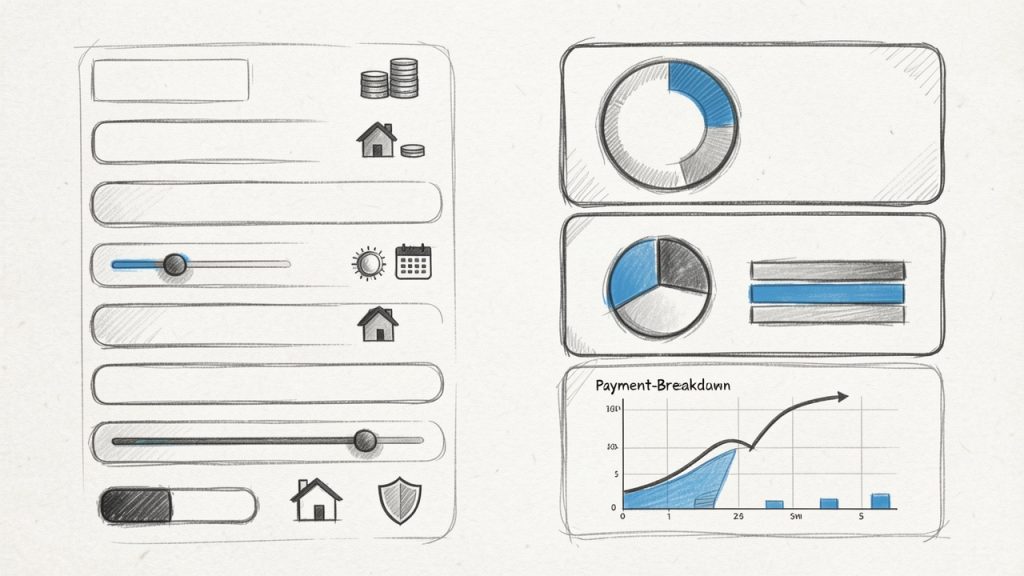
Begin with the four basic inputs: home price, down payment, loan term, and interest rate. This gives you the foundation of the monthly mortgage estimate. If you do not yet know the exact interest rate, use a reasonable market estimate and test a slightly higher option too.
This is where the calculator starts to become useful. Instead of asking, “How much house can I buy?” ask, “What payment can I comfortably carry?” That shift in perspective often leads to smarter decisions. A home price should support your life, not squeeze it.
Add the full housing costs
Once you have the basic payment, add property taxes, insurance, and any expected PMI or HOA fees. This creates a truer monthly figure. It is the number your bank account will actually feel.
This step is essential because buyers often underestimate ownership costs. A mortgage calculator is most valuable when it reflects real conditions, not ideal ones. If a tool allows you to separate principal and interest from total monthly cost, look at both numbers closely.
Test multiple scenarios
One estimate is helpful. Three or four estimates are far better. Run different combinations to see how the numbers move. Increase the down payment. Change the term from 30 years to 15. Add a small extra payment. Adjust the interest rate upward.
A quick scenario test like this can reveal where your leverage is. Sometimes the biggest improvement comes from a better rate. Other times it comes from choosing a lower purchase price or avoiding PMI. The calculator makes these trade-offs visible without pressure.
Use this simple process
- Set your budget ceiling based on a monthly payment you can sustain comfortably.
- Enter realistic loan details including down payment, term, and estimated rate.
- Include taxes and insurance so the monthly total reflects real ownership cost.
- Compare scenarios to find the best balance between affordability and long-term cost.
Think beyond lender approval
Lender approval is not the same as personal affordability. A lender may approve a higher amount than you feel comfortable carrying, especially if your income history looks strong on paper. But your mortgage has to fit your actual life, including savings goals, business cycles, childcare, travel, retirement planning, or emergency reserves.
A mortgage calculator helps you define your own affordability threshold. That is often more important than the maximum amount a lender is willing to offer. The tool gives you a way to set boundaries before outside pressure enters the picture.
Common mistakes to avoid
A mortgage calculator is only as useful as the assumptions behind it. One common mistake is forgetting the full monthly cost. Another is choosing a home price first and backing into the payment later. People also tend to assume they will always make extra payments, even if their budget is already tight.
The better approach is to be conservative. If the payment only works under ideal conditions, it may not truly work. A good estimate leaves room for maintenance, rising insurance costs, and life changes. Homeownership should feel stable, not constantly stretched.
When to revisit your calculations
You should rerun your mortgage calculations whenever one of the major variables changes. That might be your credit score, the current interest rate, your down payment savings, or the type of property you are considering. Even a modest change can materially affect your monthly obligation.
This matters during rate shifts and competitive housing markets. Buyers who revisit the calculator regularly tend to make calmer, more informed choices because they understand the numbers before making an offer.
Conclusion
A mortgage calculator is more than a convenience. It is a decision-making tool that helps you understand affordability, compare scenarios, and see the real cost of a home loan before you commit. It brings clarity to one of the biggest financial decisions most people will ever make.
The next step is practical. Open a mortgage calculator, enter realistic numbers, and test several scenarios based on your budget, not just your ambition. When you can clearly see the monthly payment, the total cost, and the trade-offs between your options, you put yourself in a much stronger position to buy wisely.