JNTZN

Tag: privacy

  • Convert JPG to PDF Online Quickly and Securely

    A simple image file can slow down an entire workflow. You scan a receipt, export a design mockup, or snap a document photo on your phone, and suddenly you need it in a format that is easier to share, print, archive, or submit. That is where the need to convert JPG to PDF online becomes practical, not just convenient.

    For small business owners, freelancers, developers, and anyone who values speed, online conversion tools solve a very common problem in seconds. You do not need heavy desktop software, advanced design skills, or complicated setup. You upload a JPG, adjust a few options if needed, and download a PDF that is easier to send to clients, attach to forms, or store in a more professional format.

    The appeal goes beyond simplicity. A PDF looks consistent across devices, feels more polished in business settings, and can combine multiple images into a single file. If you often work with invoices, contracts, portfolios, screenshots, reports, or photographed paperwork, learning how to convert JPG to PDF online can save time and reduce friction in your daily process.

    What is convert JPG to PDF online?

    At its core, convert JPG to PDF online means using a web-based tool to transform one or more JPG image files into a PDF document directly in your browser. Instead of installing software on your computer, you use an online service that processes the image and packages it into a PDF file you can download immediately.

    This matters because JPG and PDF serve different purposes. A JPG is an image format. It is excellent for photos and visual content, but it is not always ideal for document workflows. A PDF, by contrast, is designed for sharing fixed-layout files. It preserves the look of the content, works well for printing, and is widely accepted for business, legal, and administrative use.

    In practical terms, converting a JPG to a PDF is often less about changing the visual itself and more about changing the container. The image remains visible, but it becomes part of a more structured, shareable document type. That distinction is important if you need to send paperwork, combine multiple scans, or present content in a more formal format.

    Online conversion is especially useful for people who work across multiple devices. You might snap a photo on your phone, upload it from a tablet, or convert files from a laptop without worrying about operating system compatibility. For busy users, that flexibility is a major advantage.

    Key aspects of convert JPG to PDF online

    Why people prefer PDF over JPG in real workflows

    A JPG is easy to create, but a PDF is often easier to use in professional settings. If you send a client a single image, it may open differently depending on the device or app. A PDF is more predictable. It feels like a finished document, not just a loose file.

    That difference matters when presentation affects credibility. A freelancer sending design proofs, a consultant submitting expense receipts, or a small business owner forwarding scanned forms all benefit from a format that looks organized and intentional. Even when the content starts as a photo, the PDF gives it a clearer business context.

    PDF files also make multi-page organization easier. If you have five JPG scans of a contract or ten product photos for a catalog draft, combining them into one PDF is far cleaner than sending a folder full of images. It reduces clutter and improves the recipient’s experience.

    The main benefits of using an online JPG to PDF converter

    The biggest benefit is speed. Most online tools are built for immediate use. You drag files into a browser window, choose the order if you have multiple images, and download the converted PDF within moments. For occasional tasks, this is much more efficient than installing dedicated software.

    Another benefit is accessibility. You can usually convert JPG to PDF online for free or at least complete basic tasks without cost. That is valuable for solo professionals and small teams that want utility without another subscription.

    There is also a lower learning curve. Good online converters are intentionally simple. They focus on one job and remove the complexity found in advanced document software. For users who just want the file converted and sent, that simplicity is a feature, not a limitation.

    File quality and formatting considerations

    Not all conversions produce the same result. The visual quality of the final PDF depends heavily on the original JPG. If the image is blurry, poorly lit, or heavily compressed, converting it to PDF will not improve it. The PDF may be easier to share, but it will still reflect the quality of the source image.

    Layout settings also matter. Some tools let you adjust page size, orientation, margins, and image scaling. These options become important when converting receipts, scanned letters, photographs, or presentation visuals. A receipt might need a compact page, while a portfolio image may look better centered on a full page with clean margins.

    File size is another trade-off. A high-quality JPG converted into a PDF can remain relatively large, especially if you combine multiple images. That can be useful when detail matters, such as in scanned contracts or design references. But if you need to email the file or upload it to a platform with size limits, compression features become useful.

    Privacy and security matter more than most users expect

    When you convert JPG to PDF online, you are often uploading files to a third-party server. That is convenient, but it introduces a privacy consideration. If your file includes invoices, IDs, legal pages, financial records, medical forms, or confidential business information, you need to be selective about the tool you use.

    A trustworthy online converter should clearly explain how files are handled, whether uploads are encrypted, and when files are deleted from its servers. If those details are missing, vague, or difficult to find, that is a warning sign. Convenience should not come at the cost of exposing sensitive data.

    For routine, non-sensitive images, this may not be a major concern. But for business use, privacy policies are part of the decision. The right mindset is simple, if you would hesitate to email the image to a stranger, do not upload it to an unknown converter without checking its handling practices first.

    Single image conversion versus combining multiple JPGs

    One of the most useful features in online converters is the ability to merge several JPG files into one PDF. This is especially valuable when working with scanned paperwork, receipts, signed pages, product images, or visual records from a site visit.

    A single-image conversion is straightforward. The JPG becomes one page in a PDF. Multi-image conversion, however, adds another layer of usefulness because it allows you to create a document that tells a sequence or contains a full set of materials. Think of it like turning a stack of loose photos into a stapled report.

    The order of pages matters here. A good converter lets you rearrange uploaded images before processing them. That small feature has a big effect on usability, especially when documents need to be reviewed in a specific sequence.

    Free tools versus advanced features

    Many people start by searching for a free JPG to PDF converter online, and that makes sense. Basic conversion is widely available without payment. For everyday needs, such as creating a PDF from a screenshot or scanned receipt, free tools are often enough.

    Paid or premium versions usually enter the picture when users need more control. That can include stronger compression, OCR support, batch processing, cloud integration, watermark removal, password protection, or higher upload limits. These are meaningful upgrades for teams and frequent users, but not always necessary for occasional tasks.

    The best choice depends on volume and context. If you convert a file once a month, free and simple is probably ideal. If you process client documents every day, reliability, privacy controls, and workflow features become more important than saving a few dollars.

    Consideration Basic Free Online Converter More Advanced Online PDF Tool
    Cost Usually free for simple tasks Often subscription-based or limited free tier
    Ease of use Very simple interface More features, slightly more setup
    Multi-file support Common, but sometimes limited Usually stronger batch handling
    Privacy features Varies significantly Often more transparent and robust
    Compression options Basic or automatic More control over output size and quality
    Best for Occasional personal or light business use Frequent professional workflows

    How to get started with convert JPG to PDF online

    Choose the right kind of tool for your use case

    Before you upload anything, think about what you actually need the PDF to do. If your goal is simply to turn one image into a downloadable PDF, nearly any reputable online converter will handle it. If you need to combine several JPGs, reduce file size, preserve print quality, or protect sensitive documents, the bar is higher.

    This step saves time because it keeps you from choosing a tool based only on search ranking or flashy design. The best converter for a one-page receipt is not necessarily the best one for client proposals, internal records, or legal paperwork. Matching the tool to the job is the simplest way to avoid frustration.

    A good starting checklist is short:

    1. Check privacy policy if the JPG contains sensitive information.
    2. Confirm multi-file support if you need more than one image in the PDF.
    3. Look for layout options if page size or orientation matters.
    4. Review file limits before uploading large images or batches.

    Prepare your JPG files before conversion

    A smoother conversion starts with cleaner source files. If the JPG is a photo of a document, crop out the background and straighten the image first. That small effort can dramatically improve how professional the final PDF looks. It also helps avoid oversized pages with too much empty space.

    If you are combining multiple files, rename them in the order you want them to appear. This makes uploads easier to manage and reduces mistakes when assembling the final document. For example, invoices, scanned pages, or portfolio images become much easier to organize when the filenames already follow a sequence.

    Resolution deserves some attention too. Extremely low-resolution JPGs can make the PDF look amateurish, while unnecessarily large files may slow uploads and create oversized PDFs. The ideal source image is clear, readable, and appropriately sized for its purpose.

    The basic process is usually very simple

    Most online workflows follow the same pattern. You upload your JPG files, adjust optional settings, start the conversion, and download the PDF. The simplicity is one reason these tools remain so popular.

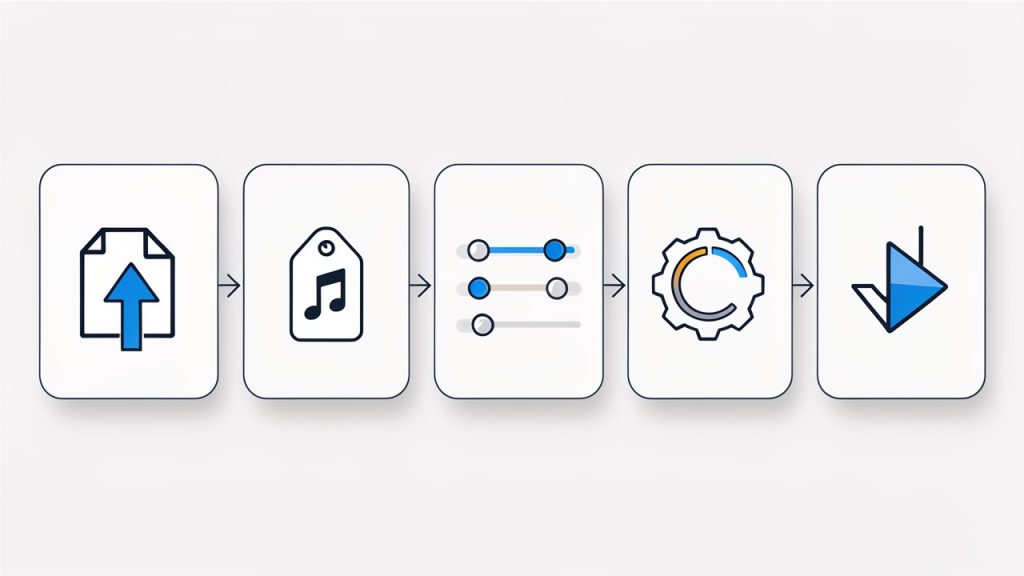
    Here is the typical sequence:

    1. Upload your JPG file or files into the online converter.
    2. Arrange the images in the correct order if creating a multi-page PDF.
    3. Select settings such as page size, orientation, margins, or compression if available.
    4. Convert and download the final PDF to your device.

    The process itself takes only a minute or two. The real difference between tools is not whether they can convert the file, but how well they handle layout, quality, speed, and privacy.

    Common mistakes to avoid

    One common mistake is assuming conversion will improve a poor image. It will not. If the original JPG is blurry, dark, crooked, or cut off, the PDF will carry those same flaws. Start with the best possible image if readability matters.

    Another issue is ignoring the final file size. A PDF made from several large JPGs can become too big for email attachments or platform uploads. If that matters, choose a converter with compression settings or optimize the images before uploading.

    Users also often overlook page formatting. A portrait-oriented document image placed badly on a landscape page can look awkward and waste space. If the tool allows layout control, use it. Those details make the difference between a file that merely works and one that looks polished.

    When online conversion is the right choice, and when it is not

    For most everyday tasks, online conversion is ideal. It is fast, browser-based, and available anywhere. If you need a quick PDF from a JPG without installing software, this is often the best route.

    Still, there are situations where online tools are not the best fit. If you handle confidential legal records, internal company documents, medical files, or highly sensitive financial data, a trusted offline solution may be safer. The same is true if your internet connection is unreliable or you need to process large batches regularly.

    That does not make online tools less useful. It simply means the smart choice depends on the context. Convenience is powerful, but so is control. The goal is not to use online tools for everything, but to use them where they make the most sense.

    Conclusion

    To convert JPG to PDF online is to solve a small but constant digital workflow problem with speed and simplicity. It helps turn loose image files into structured documents that are easier to share, print, archive, and present professionally. For business users and productivity-minded professionals, that small shift in format often creates a real improvement in day-to-day efficiency.

    The next step is straightforward. Choose a reputable tool, start with a clear JPG, pay attention to privacy if the file is sensitive, and use layout options when presentation matters. Once you build this into your workflow, converting a JPG into a polished PDF becomes less of a task and more of a quick habit.

  • How to Convert PNG to JPG Online — Fast, Secure & High-Quality

    How to Convert PNG to JPG Online — Fast, Secure & High-Quality

    A bloated PNG can quietly slow down your website, break an email attachment limit, or frustrate a client who just wants a simple photo upload. If you need to convert PNG to JPG online, the good news is that it usually takes less than a minute. The catch is that not every converter handles quality, transparency, privacy, and compression the same way.

    That matters more than most people realize. A PNG with a transparent background can turn into a white box. A colorful product image can shift slightly if the color profile is mishandled. And if you upload sensitive graphics to the wrong tool, convenience can come at a privacy cost. The best approach is not just finding a converter, but choosing the right one for your use case.

    This guide explains when PNG-to-JPG conversion makes sense, how online tools work, what settings to choose, and which free tools are worth using. It also covers the less obvious details, like metadata, sRGB color consistency, progressive JPGs, and how to avoid common quality problems.

    Why convert PNG to JPG? When and why it matters

    PNG and JPG solve different problems. PNG is lossless, which means it preserves image data more faithfully and supports transparency. That makes it ideal for logos, interface elements, screenshots, and images you may want to edit again later. JPG is lossy, which means it compresses image data to create a much smaller file, often with little visible difference at sensible settings.

    For many real-world tasks, that smaller size is the whole point. A large PNG photo might be several megabytes, while a JPG version at good web quality could be dramatically smaller. That reduction improves page speed, speeds up uploads, and makes file sharing easier. For a blog, ecommerce gallery, listing photo, or portfolio image, JPG is often the more practical format.

    PNG vs JPG: the real trade-off

    The simplest way to think about it is this, PNG prioritizes fidelity and flexibility, while JPG prioritizes efficiency. If your image is a photograph, especially one without transparency, JPG usually makes more sense for online use. If it is a logo with crisp edges or an asset layered into a design workflow, PNG may still be the better choice.

    The major compromise is that JPG does not support transparency. Any transparent area in a PNG must be flattened onto a solid background, typically white, black, or a custom color. JPG also introduces compression artifacts if quality is set too low, which can show up as blur, haloing, or blocky gradients.

    Common reasons to convert

    Small business owners and freelancers often convert PNG to JPG online for practical reasons. Product photos on a store need to load faster. Images for a CMS may need a more common web-friendly format. Email systems may reject large attachments. Social platforms and marketplaces may also handle JPG more predictably than PNG.

    Developers and productivity-focused users often convert in batches to streamline asset preparation. If you are optimizing screenshots for a documentation site, compressing article images for better Core Web Vitals, or preparing image uploads for clients, JPG is often the fastest path to a lighter workflow.

    When you should not convert

    There are cases where converting is the wrong move. If you need transparent backgrounds, keep the file as PNG or switch to a modern format that supports alpha transparency. If the image is part of an editing pipeline, repeated JPG saves can degrade quality over time.

    You should also avoid converting archival master files just to save space. Keep the original PNG if it matters. A good rule is simple, publish a JPG if you need speed, but preserve the source PNG if you may need to edit, reuse, or repurpose the file later.

    How online PNG-to-JPG conversion works

    At a basic level, an online converter takes the source PNG, removes or flattens any transparency, applies JPG compression, and gives you a downloadable output file. What differs from tool to tool is where the conversion happens, what settings you can control, and what happens to your file during and after the process.

    Some tools run the conversion on their servers after you upload the image. Others, especially privacy-focused browser apps, do the work locally in your browser. That distinction affects both speed and trust.

    Client-side vs server-side conversion

    A server-side converter uploads the image to a remote system, processes it there, and then provides the JPG for download. This is often convenient and can support more formats, automation, and larger workflows. It is common in tools like CloudConvert, Convertio, and Zamzar.

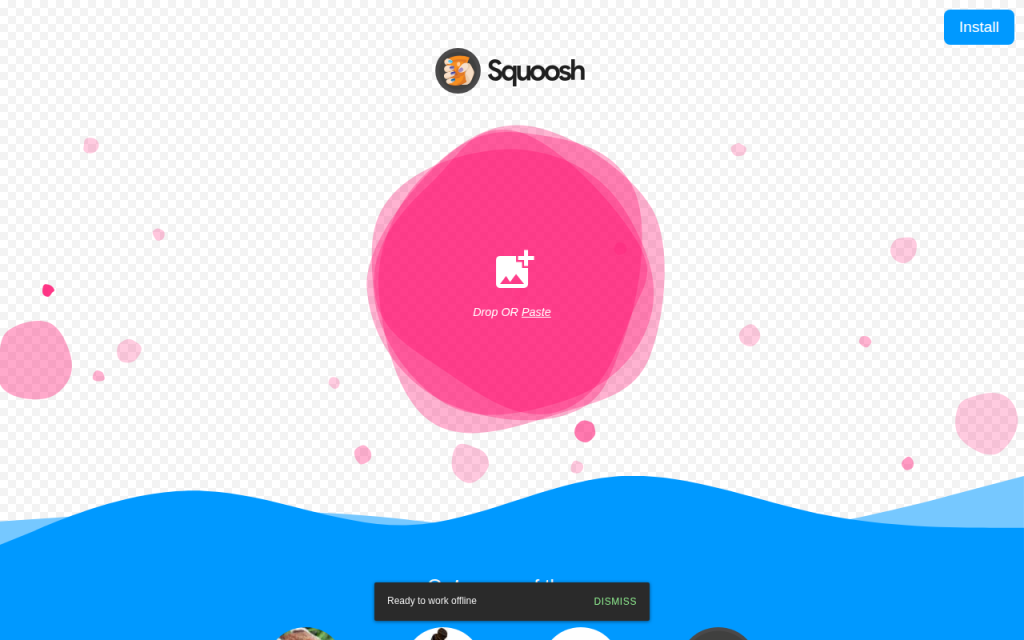
    A client-side converter performs the work directly in your browser. The main advantage is privacy, because the file may never need to leave your device. This is why tools like Squoosh stand out. For sensitive images, browser-based conversion is often the smarter option, assuming the tool truly processes locally.

    Color profiles, metadata, and quality settings

    Not all converters treat image data the same way. Many tools let you choose a quality setting, usually as a slider or percentage. For most web images, 75 to 85 quality is a strong starting point. Lower than that can create noticeable artifacts. Higher than that may preserve detail but reduce the file-size benefit.

    Metadata is another overlooked detail. Your PNG or converted JPG may contain information such as timestamps, authoring details, or embedded color profile data. Some tools strip metadata automatically, which helps reduce file size and protect privacy. Others preserve it. Neither behavior is universally better, so it is worth checking if that matters for your project.

    Handling transparency correctly

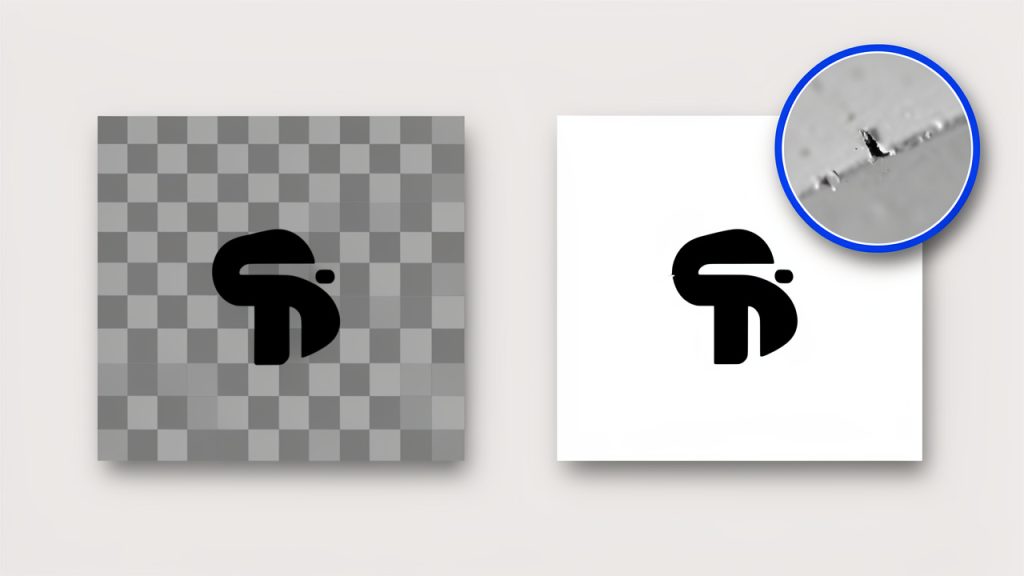
    When you convert a transparent PNG to JPG, the transparent pixels must be replaced with something. Most tools either flatten them to white by default or let you choose a custom background color. If the converter does this poorly, you may see jagged edges or dark halos around formerly transparent regions.

    Transparency flattening before/after: left PNG with checkerboard background, right flattened background — white (alpha removed)

    This is especially noticeable with logos, icons, and cutout product images. If you know the image will sit on a white web page, a white background is usually the cleanest choice. If it will appear on a colored layout, choose a matching background to avoid ugly edge artifacts.

    Step-by-step: Convert PNG to JPG online

    The workflow is usually simple, but small setting choices can have a big effect on the result. If you want a fast, dependable process, use this general method.

    Step 1, choose a trusted tool

    Start with a converter that has a solid reputation, a clear privacy policy, and enough controls for your needs. If the image is sensitive, lean toward a client-side tool. If you need batch conversion, cloud storage imports, or advanced settings, a server-based service may be more convenient.

    Step 2, upload the PNG

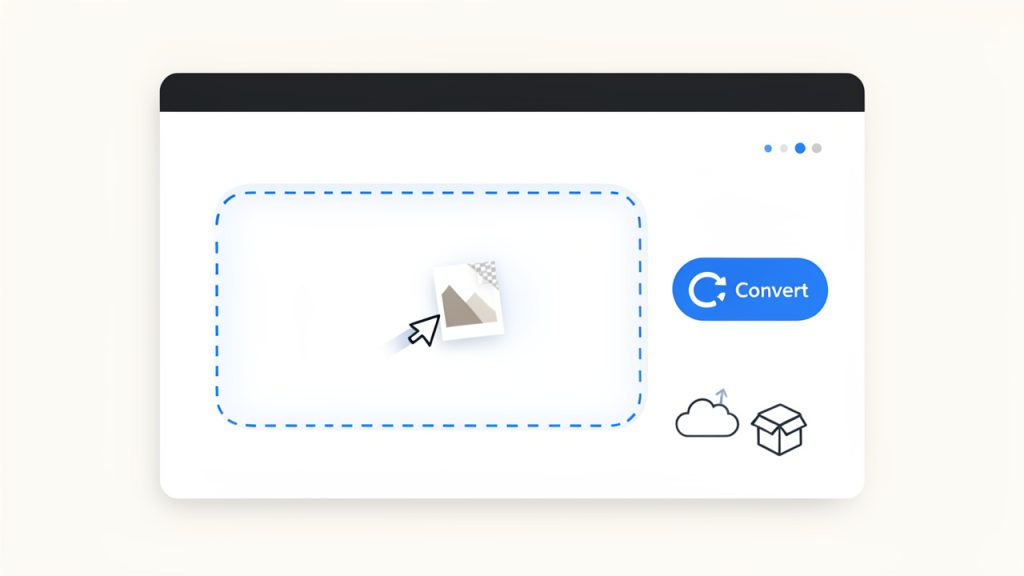
    Drag-and-drop upload UI with dashed drop zone labeled “Drop PNG files here” and a PNG thumbnail being dragged in

    Most tools support drag-and-drop, which is the fastest option. You can also browse for files manually or import from cloud services in some cases. If you are converting multiple images, check whether the tool supports batch upload before you begin.

    Step 3, choose output options

    If the tool offers settings, set the output format to JPG, then choose your quality level. For web images, a quality setting around 75 to 85 usually gives the best balance between clarity and size. If the PNG has transparency, select an appropriate background color.

    Some converters also let you resize before export. This is useful because a smaller image dimension often cuts file size more than compression alone. If your website only displays an image at 1200 pixels wide, exporting a 4000-pixel JPG is wasted weight.

    Step 4, convert and download

    Once the settings are in place, run the conversion and download the file. On some tools this happens instantly. On others, especially server-based services, there may be a brief processing step. If batch files are involved, you may receive a ZIP archive.

    Step 5, verify quality and metadata

    Open the new JPG and inspect it before publishing. Look for soft detail, color shifts, edge artifacts, or an unexpected background color where transparency used to be. If the file still feels too large, try resizing first, then adjusting compression slightly.

    Also check whether metadata was preserved or removed if privacy or workflow compatibility matters. This step is easy to skip, but it is the difference between a quick conversion and a polished one.

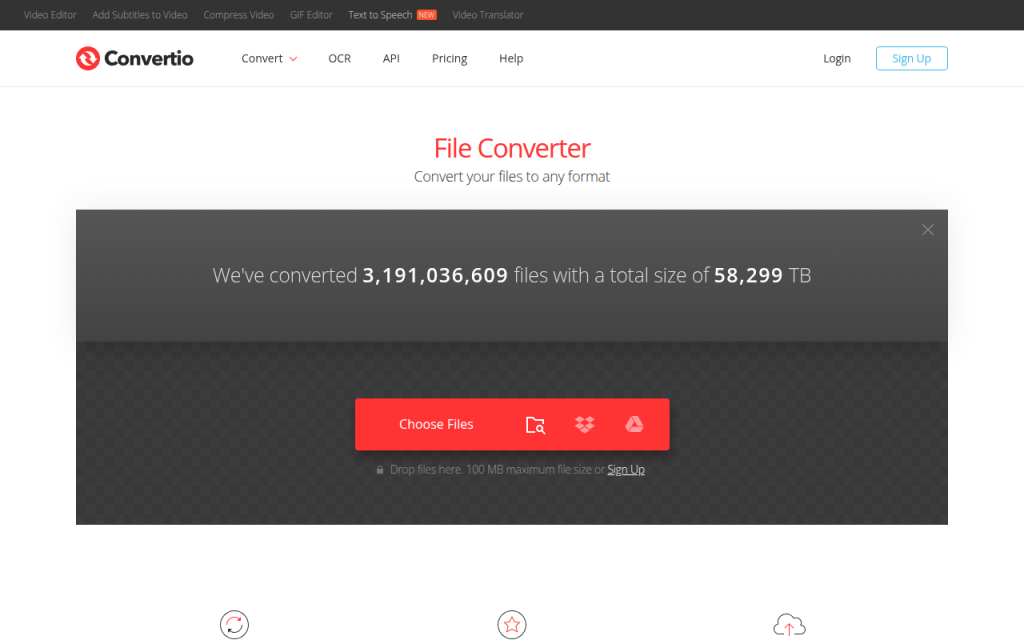
    Screenshot of convertio.co

    1. Convertio

    Convertio is one of the most recognizable names for people who need to convert PNG to JPG online quickly. Its main appeal is convenience. The interface is clean, drag-and-drop works well, and the service supports a huge range of file types beyond images, which makes it especially useful for freelancers and small business owners who want one tool for occasional format changes across different media. Convertio supports cloud imports, basic batch workflows, and a familiar conversion flow that does not overwhelm non-technical users.

    Convertio is very beginner-friendly, quick to set up for one-off conversions, and convenient for cloud import/export. The trade-offs are that processing happens on their servers, which may not suit sensitive files, advanced image controls are not as deep as specialist tools, and free usage limits can be restrictive for heavy users.

    Website: https://convertio.co

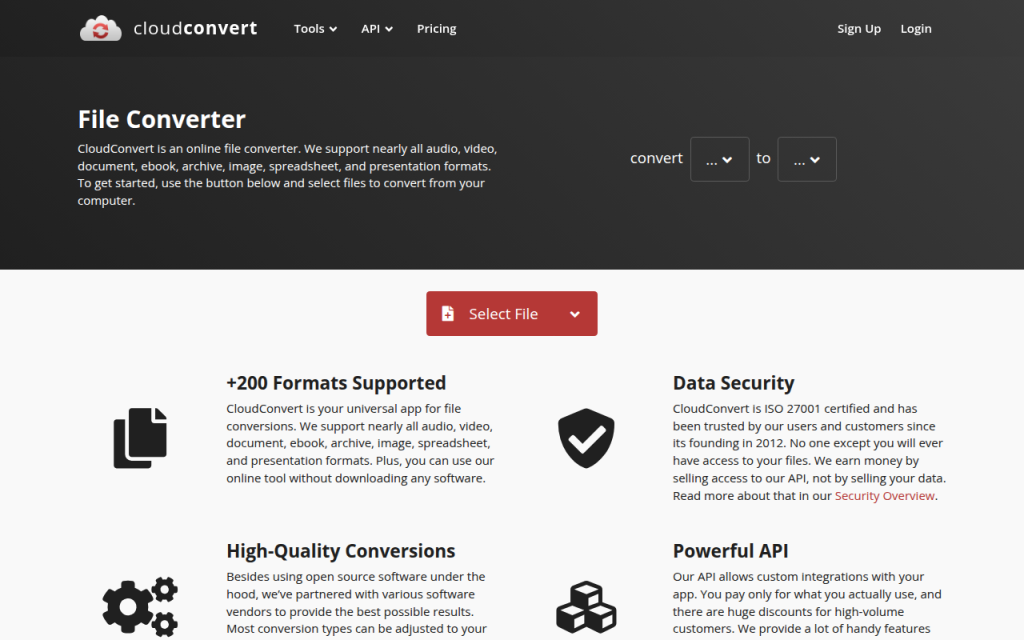
    Screenshot of cloudconvert.com

    2. CloudConvert

    CloudConvert is a strong option for users who want more control and a professional feel. It supports image conversion well and caters to users who care about workflow reliability, API access, and configurable settings. If you are a developer, power user, or agency handling recurring conversions, CloudConvert often feels more robust than lightweight web converters. It provides a high-quality engine, advanced settings for supported formats, and API access for automation and integration, which makes it especially useful when you need consistency across batches or must integrate conversion into a larger workflow.

    CloudConvert is reliable for professional use, supports good format coverage and workflow flexibility, and works well for teams and developers. Its downsides are server-side uploads, a less casual feel than ultra-simple converters, and limited free credits for frequent users.

    Website: https://cloudconvert.com/

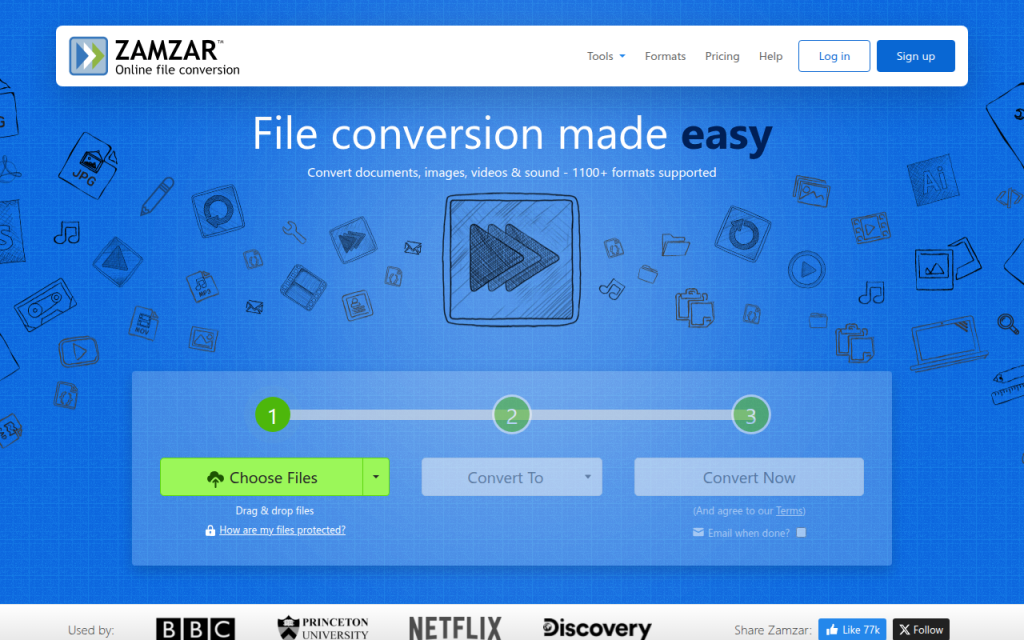
    Screenshot of zamzar.com

    3. Zamzar

    Zamzar is a long-standing, no-frills choice for straightforward online file conversion. If you want to upload a PNG, choose JPG, and download the result without worrying about many settings, Zamzar does the job. It supports a broad range of file types and is simple to use, making it a good fit for occasional users and business users who need low-friction conversions.

    Zamzar offers a straightforward conversion flow and broad file support, but its optimization controls are limited, processing is server-side, and it may feel basic to users who want detailed compression tuning.

    Website: https://www.zamzar.com/

    Screenshot of squoosh.app

    4. Squoosh

    Squoosh is the standout choice if privacy and image optimization matter more than generic file conversion convenience. Built as a browser-based image app, much of the processing can happen client-side, directly on your device. For users who do not want to upload sensitive visuals to a remote server, that is a major advantage. Squoosh also provides visual before-and-after comparisons and fine-grained optimization controls, letting you see the effect of compression before exporting and make smarter decisions about file size.

    Squoosh is excellent for privacy-conscious users and for fine tuning quality, and it is ideal for web optimization workflows. Its limitations are that it is less general-purpose than multi-format converters, can feel more technical for beginners, and is not primarily designed for batch handling.

    Website: https://squoosh.app/

    Screenshot of online-convert.com

    5. Online-Convert.com

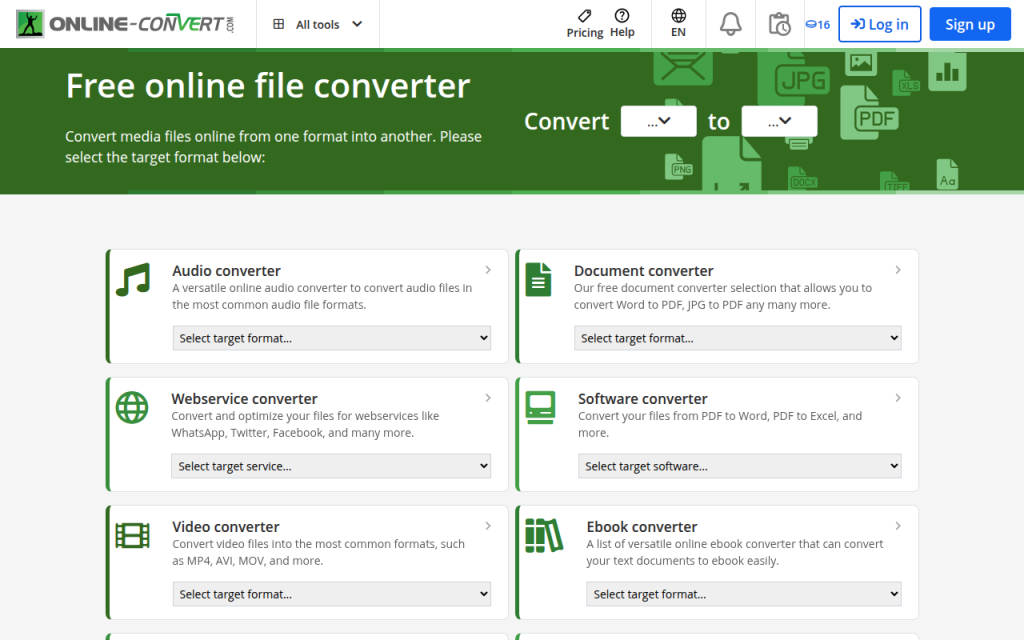
    Online-Convert.com sits in a practical middle ground. It offers more settings than the simplest converters while remaining accessible to non-experts. If you want to tweak output behavior, adjust image-related parameters, or work with a range of file types from one platform, it is a solid pick.

    Online-Convert.com is more configurable than many casual tools and strikes a good balance between ease and control. The trade-offs are server-side conversion, a busier interface than minimalist competitors, and free limits that may apply depending on usage.

    Website: https://www.online-convert.com/

    Quick comparison of the best PNG to JPG online tools

    ToolBest forPrivacy modelBatch supportQuality controlsEase of use
    ConvertioFast everyday conversionsServer-sideYesBasic to moderateVery easy
    CloudConvertProfessional and repeat workflowsServer-sideYesModerate to strongEasy
    ZamzarOccasional simple useServer-sideLimited to moderateBasicVery easy
    SquooshPrivacy and optimizationClient-sideLimitedStrongModerate
    Online-Convert.comFlexible utility useServer-sideYesModerateEasy

    Best practices and tips to preserve quality and reduce size

    The best JPG is not always the smallest one. Over-compress an image and it looks cheap, keep it too large and your page speed suffers. The sweet spot for most photographic web images is quality 70 to 85, especially after resizing to appropriate display dimensions.

    If you are working with screenshots, graphics with text, or UI elements, be cautious. JPG can blur edges and introduce artifacting around letters or sharp lines. In many of those cases, PNG may still be the better choice. Conversion is most effective when the source is photo-like rather than graphic-heavy.

    Resize before you obsess over quality

    A lot of oversized images remain too large because users only change compression. Dimension matters more than people think. Reducing an image from 4000 pixels wide to 1600 pixels wide can slash file size while keeping the image perfectly usable on most websites. Cropping also helps. If part of the image does not contribute to the message, remove it before exporting. Less visual information often means a lighter file and a stronger composition at the same time.

    Use progressive JPG and sRGB when possible

    A progressive JPG loads in layers, which can make pages feel faster to users, even if the total file size is similar to a baseline JPG. Not every converter exposes this option, but it is worth using for web publishing when available. For color consistency, sRGB is the safest choice for the web. If your tool or editor lets you convert or embed an sRGB profile, do it to reduce the chances of washed-out or oversaturated images on different screens and browsers.

    Strip metadata when privacy or speed matters

    Metadata can include location, timestamps, device information, and editing details. If you are publishing to the web or sending files externally, removing unnecessary metadata can slightly reduce size and improve privacy. If you are a photographer or need EXIF data for workflow reasons, keep it. Otherwise, stripping it is usually the smarter default for public-facing images.

    Privacy, security, and legal considerations

    Uploading files to an online converter is not a neutral act. Once the file leaves your device, you are trusting the service to process it responsibly, delete it promptly, and not reuse it in ways you did not intend. That is fine for generic stock-style visuals, but not always for client assets, internal documents, or unreleased product imagery.

    If the image contains confidential information, copyrighted material under restricted use, or customer data, think twice before using a server-side tool. A browser-based converter like Squoosh, or a local desktop app, is often safer.

    What to check before uploading

    Look for a clear privacy policy, retention timeline, and deletion policy. Check whether files are auto-deleted after a short period and whether the provider states how uploads are handled. If that information is hard to find, that alone is a warning sign.

    Also consider the legal side. If you are converting client work, licensed visuals, or partner assets, make sure your use of a third-party conversion service does not conflict with contract terms or platform restrictions.

    Troubleshooting: Common conversion problems and fixes

    Even the best online tool can produce a disappointing result if the settings or source image are not right. Most issues fall into a handful of predictable categories, and they are usually fixable.

    Blurry output or banding artifacts

    If the JPG looks soft or shows ugly transitions in skies, shadows, or gradients, the quality setting is probably too low. Raise the compression quality slightly and try again. If the source image is extremely detailed, resize it first rather than forcing ultra-heavy compression. Banding is especially common in areas with subtle tonal shifts. Some tools simply handle those cases better than others, so switching converters can help too.

    Color shifts or dull-looking images

    If the image looks less vibrant after conversion, the problem is often the color profile. Exporting or converting to sRGB usually helps. If the tool does not expose profile controls, try a different converter or use a desktop editor for that file. Also compare the file in a proper image viewer rather than relying only on browser thumbnails, which can sometimes mislead.

    Output file is still too large

    If the JPG remains bigger than expected, check the image dimensions first. A large-resolution file at moderate compression can still be huge. Resize to the actual needed display size, then export again at around 75 to 85 quality. If the image contains large flat-color areas, text, or interface elements, JPG may simply be inefficient for that kind of content. In that case, PNG or another modern format may perform better.

    Transparency turned into the wrong background

    This happens when a transparent PNG is flattened automatically, often to white or black. If the result looks wrong, choose a specific background color during export if the tool allows it. Matching the destination page background usually produces the cleanest edges.

    Alternatives: Desktop and command-line options

    Online tools are convenient, but they are not always the best choice. If you handle sensitive files, large batches, or recurring asset work, local software is often faster and safer in the long run.

    On macOS, Preview can export many images to JPG easily. On Windows, Paint or Photos can handle basic conversions. Free tools like GIMP and IrfanView offer more control and are better for repeat use.

    For developers and power users, ImageMagick is one of the most efficient options available, excellent for batch conversion, scripting, and automation. Here are a few practical examples:

    magick input.png -background white -flatten -quality 85 output.jpg
    

    This command converts a PNG to JPG, fills transparent areas with white, and uses a quality setting of 85.

    magick input.png -resize 1600x -background white -flatten -quality 80 output.jpg
    

    This version resizes the image to 1600 pixels wide before converting, which is often a better way to reduce file size.

    magick *.png -background white -flatten -quality 82 *.jpg
    

    For batch workflows, commands like this can save enormous time, though exact shell behavior may vary by system. If you handle dozens or hundreds of files regularly, automation quickly becomes more efficient than any online interface.

    Quick FAQ

    Will converting PNG to JPG reduce quality permanently?

    Yes, potentially. JPG is a lossy format, so some image data is discarded during compression. At good settings the loss may be hard to notice, but it is still there. Keep the original PNG if you may need it later.

    Can I convert a transparent PNG to JPG and keep transparency?

    No, JPG does not support transparency. The transparent area must be replaced with a solid background color.

    What is the best JPG quality setting for web use?

    For most photos, 75 to 85 is the practical sweet spot. Start there, then adjust based on image detail and file-size goals.

    Are online converters safe?

    Some are reasonably safe for routine files, but not all are equal. For sensitive images, use a client-side tool or local software. Always review privacy and deletion policies before uploading.

    Recommended workflows by use case

    If you just need to convert one ordinary image fast, a simple service like Convertio or Zamzar is usually enough. If you need more reliability or batch-friendly workflows, CloudConvert or Online-Convert.com makes more sense. If privacy matters, Squoosh is the strongest web-based choice because it is geared toward local, browser-side processing.

    If you routinely prepare images for websites, the best workflow is often this: start with the original file, resize to the actual needed dimensions, convert to JPG at around 80 quality, use sRGB for consistent color, and remove metadata unless you explicitly need it. Then preview the final file before publishing.

    A final check goes a long way. Confirm the background looks correct, inspect the image at full size, verify the file size is reasonable, and keep the source PNG stored safely. That way you get the speed benefits of JPG without losing control of quality, privacy, or future editing flexibility.

  • MP3 Converter: Fast, Private Audio Conversion for Workflows

    MP3 Converter: Fast, Private Audio Conversion for Workflows

    Audio files have a way of becoming a bottleneck at the worst possible moment. A podcast episode is ready, but it is in the wrong format. A client sends a voice note that will not play on your device. A webinar recording is too large to upload, too awkward to share, or incompatible with the editing tool you actually use. That is where a Mp3 converter becomes one of those simple tools that quietly saves time, money, and frustration.

    For small business owners, freelancers, developers, and productivity-focused users, the appeal is obvious. You want an audio file that works everywhere, opens quickly, and is easy to store, send, publish, or archive. An MP3 converter helps you take audio from one format and turn it into MP3, the most widely recognized and supported format in everyday use. The trick is not just converting files, but doing it in a way that preserves quality, protects privacy, and fits smoothly into your workflow.

    What is an MP3 converter?

    An MP3 converter is a tool that changes audio files from one format into MP3. In practical terms, it takes files such as WAV, AAC, M4A, FLAC, OGG, or even audio extracted from video, and transforms them into a version that is easier to play on nearly any phone, laptop, browser, media app, or car stereo. It is a format translator, but one with real implications for file size, quality, compatibility, and convenience.

    The reason MP3 remains so popular is simple. It balances compression and usability exceptionally well. Uncompressed formats like WAV can sound excellent, but they are often large and cumbersome. Other compressed formats may offer technical advantages, but MP3 still wins on universal support. If your goal is to make audio accessible to clients, team members, listeners, or customers with minimal friction, MP3 is often the safest choice.

    For business and productivity use, this matters more than many people realize. A converted audio file can be easier to attach to emails, upload to a CMS, embed on a website, distribute in an online course, or share in a project management system. Instead of forcing the recipient to troubleshoot playback issues, you provide a file they can use immediately. That is the real value of a good MP3 converter. It removes technical obstacles from communication.

    Why people use MP3 so often

    MP3 became the default for a reason. It is lightweight, familiar, and broadly accepted across devices and software. If you are publishing voiceovers, training clips, interviews, or customer-facing media, there is a good chance MP3 will work without extra instructions or compatibility checks.

    There is also a practical storage benefit. Converting large raw recordings into MP3 can significantly reduce file size, which makes cloud storage less expensive and transfer times shorter. For freelancers and small teams juggling multiple projects, that can add up quickly. A smarter file format is not just a technical preference, it is an operational advantage.

    Common file types an MP3 converter handles

    Most MP3 converters are built to accept a wide range of input formats. A typical tool can work with audio formats like WAV, FLAC, AAC, OGG, and M4A. Some also extract audio from video files such as MP4 or MOV, which is useful when you need the soundtrack, interview audio, or meeting recording without the full video attached.

    The exact support varies by tool, of course. Some online converters focus on speed and simplicity, while desktop tools often support more advanced settings. That difference matters if you need batch conversion, bitrate control, metadata editing, or privacy protections for sensitive files.

    Key aspects of MP3 converters

    Choosing an MP3 converter is not just about whether it works. Most tools can convert a file. What separates a useful converter from a frustrating one is how well it handles quality, speed, control, and security. Those factors affect the final listening experience and the amount of time you spend fixing avoidable issues.

    Audio quality and bitrate

    Bitrate trade-offs: file size vs audio quality

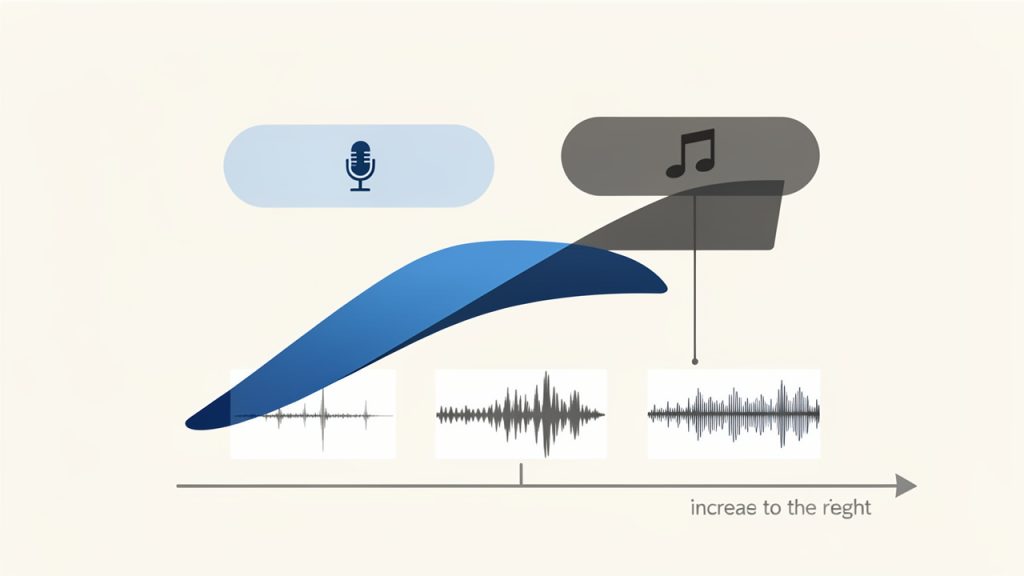
    The most important concept to understand is bitrate. Bitrate determines how much audio data is stored per second in the MP3 file. In simple terms, higher bitrates usually mean better sound quality, but also larger file sizes. Lower bitrates save space, but can make audio sound thin, muffled, or compressed.

    For spoken audio such as interviews, voice notes, or training content, a moderate bitrate is often enough. For music, sound design, or premium branded media, higher bitrate settings are usually worth it. The right choice depends on how the file will be used. If the audio is part of a public-facing product, quality should carry more weight. If it is an internal memo or a rough archive, a smaller file may be more practical.

    File size and storage efficiency

    One of the biggest reasons to use an MP3 converter is compression. Large files create friction. They upload slowly, consume storage, and can fail in low-bandwidth environments. MP3 reduces that burden while keeping the audio usable for most everyday purposes.

    This is especially helpful for businesses that create recurring content. If you record frequent client calls, podcast episodes, tutorials, or training materials, keeping everything in uncompressed formats can become expensive and disorganized. Converting finalized content into MP3 gives you a more manageable media library without making your systems feel overloaded.

    Compatibility across devices and platforms

    Compatibility is where MP3 continues to shine. An MP3 file will usually play with minimal resistance across operating systems, browsers, smartphones, media players, and communication platforms. That broad compatibility is often more valuable than small technical differences in format performance.

    Think of it like sending a PDF instead of a niche document type. You are choosing the format most likely to open successfully for the other person. When you use an MP3 converter, you are often making the file more usable for everyone else, not just for yourself. That matters when your audience includes clients, customers, team members, or students using different devices and apps.

    Speed and ease of use

    For many users, especially those who rely on free online tools, the best MP3 converter is the one that gets the job done quickly. A clean interface, fast uploads, and straightforward export settings can save more time than a long list of advanced features you never touch.

    That said, simplicity should not come at the cost of control. A useful converter should make basic actions easy while still giving you access to options like bitrate selection, trimming, filename handling, and batch processing when needed. The ideal experience is quick for routine work and flexible for more demanding tasks.

    Privacy and security considerations

    Privacy is often overlooked until the audio file contains something sensitive. If you are converting internal calls, customer interviews, confidential meetings, or pre-release content, uploading files to a random online converter may not be a smart move. Some services retain uploads longer than expected or provide limited clarity about data handling.

    This is why it is worth checking how a converter treats your files. Look for clear deletion policies, secure uploads, and transparent terms. If the content is especially sensitive, a desktop or offline MP3 converter may be the better option. Convenience matters, but data control matters more when the audio is business-critical.

    Feature differences between converter types

    Converter TypeBest ForStrengthsTrade-offs
    Online MP3 converterQuick one-off tasksNo installation, easy access, works in browserUpload limits, privacy concerns, fewer advanced controls
    Desktop MP3 converterFrequent or sensitive conversionsBetter performance, offline use, richer settingsRequires installation, may have a learning curve
    Mobile MP3 converter appOn-the-go tasksConvenient from phone or tabletSmaller interface, limited power for larger jobs
    Integrated media editorUsers already editing audio/videoConversion plus trimming, editing, taggingCan be overkill for simple conversions

    How to get started with an MP3 converter

    Getting started with an MP3 converter is usually straightforward, but a little planning helps you avoid quality loss and unnecessary rework. The first step is to define your outcome. Are you converting for playback compatibility, smaller file size, email sharing, publishing, or archiving? That single decision influences the settings you should choose.

    If you are converting speech-based content, focus on clarity and manageable file size. If you are converting music or branded audio assets, preserve more quality. If speed is the main concern, an online tool may be enough. If privacy, batch processing, or repeat use matters, a desktop solution is often the smarter long-term choice.

    A simple way to begin

    MP3 conversion workflow

    You do not need a complicated setup to start using an MP3 converter effectively. In most cases, the process follows the same pattern:

    1. Upload or import your file.
    2. Choose MP3 as the output format.
    3. Select quality or bitrate settings.
    4. Convert and download the new file.
    5. Test playback before sharing or publishing.

    Those five actions are enough for most everyday tasks. The final step is the one people skip most often. Always test the converted file on at least one common device or player. A successful conversion is not just a completed download, it is a file that sounds right and behaves as expected.

    Choosing the right settings

    Settings matter because conversion is not magic. If you choose a very low bitrate, the file may be smaller, but the sound can suffer noticeably. If you choose a very high bitrate for a simple spoken memo, you may be wasting storage and upload time without gaining meaningful quality.

    A useful rule of thumb is to match the setting to the purpose. Voice recordings can often be converted at moderate settings while remaining clear and professional. Music, polished content, and public-facing assets deserve more generous quality settings. This is where testing one or two versions can save trouble later. Compare them briefly and keep the smallest file that still sounds good.

    Avoiding common conversion mistakes

    A common mistake is converting a file repeatedly between compressed formats. Each conversion can degrade quality, especially if the source is already compressed. If possible, start from the highest-quality original file, then create your MP3 from that version. It is similar to making copies of a photocopy. Each generation tends to lose something.

    Another mistake is ignoring metadata and naming conventions. If you are handling dozens of client files, podcast clips, or training modules, a vague filename like “audio-final-new-2.mp3” will create confusion fast. A clean naming structure makes your converted files easier to search, share, and archive. Good organization turns conversion from a one-time fix into a scalable workflow.

    When free online tools are enough

    For occasional use, free online MP3 converters can be perfectly adequate. If you have a non-sensitive file, a stable internet connection, and a basic need, such as turning a WAV file into something easier to email, an online tool can solve the problem in minutes.

    The key is to use them intentionally. Check file size limits, review privacy language, and avoid uploading confidential recordings unless you trust the platform. Free tools are best viewed as convenience tools, not automatic solutions for every type of media workflow.

    When you may need something more advanced

    As your needs grow, the limits of simple converters become more obvious. If you regularly process multiple files, need precise bitrate control, want to trim silence, preserve metadata, normalize audio levels, or automate repetitive tasks, a more advanced MP3 converter or media application can save significant time.

    This is especially true for freelancers and teams working with recurring content pipelines. A podcast producer, course creator, virtual assistant, or developer managing downloadable assets often benefits from a repeatable process rather than one-off browser conversions. At that point, the converter becomes part of your production system, not just a rescue tool.

    Practical use cases for business and productivity

    The value of an MP3 converter becomes clearer when you look at everyday scenarios. A consultant may record client summaries and convert them into lightweight MP3 files for quick delivery. A coach might turn webinar audio into downloadable lessons. A developer building a knowledge base may need standardized audio assets that load reliably across platforms. In each case, conversion supports a smoother user experience.

    There is also a strong internal productivity angle. Teams often work with recordings from meetings, interviews, or brainstorming sessions. Converting those files into MP3 can make them easier to share in cloud folders, messaging tools, or project systems. That sounds small, but repeated across a week or month, it reduces friction in collaboration.

    Typical use cases at a glance

    Use CaseWhy MP3 HelpsWhat to Prioritize
    Podcast publishingEasier distribution and broad playback supportHigher audio quality, metadata
    Client voice deliverablesFast sharing and smaller attachmentsClear speech, consistent naming
    Course and training contentAccessible downloads for students or staffBalance quality and file size
    Meeting archivesEasier storage and playback laterCompression efficiency, organization
    Audio from videoExtracts only what you needAccuracy, format support

    How to choose the best MP3 converter for your needs

    The best MP3 converter is the one that fits your actual workflow, not the one with the longest feature list. If you only convert a file once a month, simplicity should win. If you manage content daily, reliability and control matter more than a polished homepage.

    Start by looking at four things: supported formats, output settings, file limits, and privacy handling. Those basics tell you whether the tool can realistically support your needs. After that, usability becomes the deciding factor. If the process feels clumsy, users tend to make mistakes, skip checks, or postpone tasks.

    For professional use, it is also worth considering whether the tool supports future growth. Today you may only need single-file conversion. Later, you may want batch processing, faster exports, or audio cleanup features. A converter that scales with your workflow often delivers more long-term value than one that solves only the immediate problem.

    Conclusion

    An MP3 converter is a simple tool with outsized practical value. It helps turn awkward, oversized, or incompatible audio files into a format that is easy to play, share, store, and publish. For small businesses, freelancers, developers, and productivity-minded users, that translates into smoother communication, faster workflows, and fewer technical interruptions.

    If you are just getting started, begin with a straightforward file conversion and pay attention to quality, compatibility, and privacy. Test the output, refine your settings, and build a small repeatable process around the kinds of audio files you use most. Once you do, an MP3 converter stops being a utility you only remember in a pinch, and becomes a reliable part of how you work.

  • Free Online Image Compressor — Optimize Images Fast

    Free Online Image Compressor — Optimize Images Fast

    An image compressor online free is one of the simplest tools in modern web workflows, yet it solves a problem that affects speed, storage, and user experience across almost every digital surface.

    Large image files slow down pages, consume bandwidth, and increase friction in content pipelines, especially when teams work with blogs, landing pages, product catalogs, and documentation portals.

    A free online compressor reduces file size directly in the browser or through a remote service, while preserving enough visual fidelity for practical use.

    For developers and efficiency-focused users, the value is not limited to convenience.

    A well-designed compressor supports faster uploads, leaner deployments, lower hosting overhead, and better performance metrics.

    When handled correctly, image compression becomes a small operational step with measurable impact on Core Web Vitals, mobile usability, and content delivery speed.

    What is Image compressor online free?

    An image compressor online free is a browser-accessible utility that reduces the file size of raster images such as JPG, PNG, WebP, and sometimes AVIF.

    The process typically works by removing redundant data, lowering quality settings, optimizing metadata, or converting the image to a more efficient format.

    The practical purpose is straightforward, reduce bytes without introducing visible degradation that would interfere with the image’s intended use.

    For a blog hero image, a product thumbnail, or a screenshot in documentation, that trade-off is often acceptable, and in many cases preferable.

    Compression versus resizing

    Compression and resizing are related, but they are not the same operation.

    Resizing changes the pixel dimensions of the image, which directly affects width and height.

    Compression changes how efficiently those pixels are stored, which affects file size more than layout dimensions.

    A 4000 by 3000 photo can be compressed and still remain 4000 by 3000.

    It can also be resized to 1600 by 1200, then compressed again for a much smaller payload.

    That distinction matters because teams often need both operations in a performance workflow, not just one.

    Compression versus resizing

    Lossy and lossless behavior

    Most online compressors use either lossy or lossless strategies, sometimes both.

    Lossy compression reduces file size more aggressively by discarding some visual data, which is generally acceptable for photographs and marketing images.

    Lossless compression preserves all image data, which is useful for graphics, UI assets, logos, and screenshots where precision matters.

    The choice depends on the asset class.

    A product image can usually tolerate moderate lossy compression, while a transparent icon or a UI element often benefits more from lossless optimization.

    Understanding this split helps avoid the common mistake of over-compressing the wrong asset type.

    Lossy vs Lossless behavior

    Why free online tools remain popular

    Free online compressors stay popular because they remove setup friction.

    There is no installation, no environment configuration, and no dependency chain to manage.

    For quick tasks, that is enough.

    They are also useful in lightweight workflows where the user only needs an occasional optimization pass.

    A developer updating a landing page, a marketer preparing an email asset, or a writer publishing documentation may not want to run a local optimization pipeline for a small batch of files.

    In those cases, an online compressor is the fastest path from raw asset to deployable asset.

    Key Aspects of Image compressor online free

    The quality of an image compressor online free depends on several operational characteristics, not just file size reduction.

    A competent tool balances output quality, browser performance, supported formats, privacy behavior, and batch handling.

    The best tools reduce friction while keeping the compression result predictable.

    Output quality and visual fidelity

    File size reduction is only useful if the image remains fit for purpose.

    A strong compressor preserves edge clarity, gradient smoothness, and text legibility, especially when processing screenshots or interface mockups.

    If artifacts become visible too early, the tool may be reducing bytes too aggressively.

    This is where quality sliders or compression presets become useful.

    They allow users to choose a lower file size for casual previews or a higher-fidelity output for production publishing.

    For web developers, this flexibility is critical because asset requirements differ across environments.

    Format awareness

    Different formats respond differently to compression.

    WebP often provides a strong balance between quality and size for modern browsers, JPEG is efficient for photos, and PNG is better for transparency and sharp graphics.

    AVIF can produce excellent compression ratios, but support and workflow compatibility may still vary depending on the stack.

    A useful online compressor should respect the format in use and, where appropriate, allow conversion to a more efficient target format.

    That said, conversion should be deliberate.

    A logo with transparency may be better left as PNG or WebP rather than forced into JPEG, where the background would be flattened.

    Browser-based processing and privacy

    Many free compressors process files directly in the browser.

    This approach reduces upload overhead and can improve privacy because the image may never leave the client session.

    For sensitive content, this matters.

    However, not every tool works that way.

    Some platforms upload files to a remote server for processing, which can be acceptable for public marketing assets but less ideal for confidential or proprietary images.

    Users should understand the processing model before trusting the tool with internal screenshots, design mockups, or restricted content.

    Batch compression and workflow efficiency

    Single-image compression is useful, but batch support is where efficiency scales.

    If a page requires multiple responsive images, or if a documentation update touches several illustrations, batch processing saves substantial time.

    A batch-capable compressor also reduces the risk of inconsistent settings across assets.

    This becomes especially important in production workflows.

    Keeping compression settings aligned across a whole set of images helps maintain visual consistency, which is often more valuable than squeezing out a few extra kilobytes from one file.

    Metadata handling

    Images often contain metadata such as camera settings, location data, or application-specific tags.

    An efficient compressor may strip unneeded metadata automatically, which reduces file size and removes sensitive information.

    For public-facing assets, that is usually desirable.

    Still, metadata removal should be treated as a functional decision.

    Some teams may want to preserve copyright tags, alt-related workflow notes, or source information during internal review.

    The best tools make this behavior clear rather than hidden.

    Practical trade-offs in free tools

    Free tools are effective, but they come with trade-offs.

    Some impose file size limits, queue restrictions, or quality control constraints.

    Others may prioritize convenience over granular control, which can be limiting for advanced users.

    The table below outlines the most common trade-offs.

    AspectBenefitLimitation
    No installationFast access from any deviceDependent on browser and network conditions
    Free usageZero direct costMay include limits or ads
    Quick processingEfficient for small tasksLarge batches may be slower
    Format supportHandles common web image typesAdvanced formats may not be fully supported
    Browser-based privacyReduces server upload exposureNot guaranteed across all services

    How to Get Started with Image compressor online free

    Using an image compressor online free is usually a simple sequence, but the order matters if the goal is reliable output rather than just smaller files.

    A disciplined workflow prevents avoidable quality loss and keeps the result suitable for deployment.

    Prepare the source image first

    Before compression, the source asset should be checked for relevance and dimensions.

    If the image is larger than the target display size, resize it first or use a tool that combines resizing and compression in one pass.

    That approach usually produces a cleaner final result than compressing a large image and relying on browser scaling.

    It is also worth removing unnecessary duplicates and selecting the correct source format.

    A screenshot exported as PNG may not need to remain PNG if transparency is irrelevant.

    Likewise, a photo should not be preserved as a massive unoptimized PNG when JPEG or WebP would be more appropriate.

    Upload and select the right settings

    After the image is loaded into the compressor, the next decision is the quality level or optimization preset.

    For photographs, moderate compression generally offers the best balance.

    For screenshots and UI graphics, the user should test compression carefully to avoid blurred text or banding around solid-color regions.

    If the tool provides format conversion, the target format should be selected based on use case, not habit.

    WebP is often a practical default for web delivery, while PNG remains useful for transparency and pixel-perfect graphics.

    The right choice depends on how the file will be consumed downstream.

    Review the output before deployment

    Compressed images should always be inspected before publication.

    Zooming in on text, gradients, and edges will reveal issues that are not obvious at a normal viewing distance.

    This is especially important for hero sections, product pages, and documentation screenshots, where clarity directly affects user trust.

    A side-by-side comparison is often enough.

    If the compressed file looks clean at the intended display size and the file size is materially lower, the process has succeeded.

    If artifacts are visible, the quality setting should be adjusted upward or a different format should be used.

    Use compression as part of a broader optimization workflow

    An online compressor is effective, but it should not be the only optimization step.

    Responsive image sizing, proper caching headers, lazy loading, and format selection all contribute to the final performance profile.

    Compression is one layer in a larger delivery strategy.

    For teams managing a site or product UI, this is where a central hub like Home can be useful as an entry point to the rest of the workflow.

    From there, images can be organized, reviewed, compressed, and prepared for publication in a more structured way.

    That reduces the number of ad hoc decisions scattered across different tools.

    A practical checklist for first-time use

    • Choose the source file carefully: Start with the cleanest, most relevant version of the image.
    • Match the format to the asset: Use JPEG, PNG, WebP, or AVIF based on content type and browser requirements.
    • Set a conservative quality level first: Reduce size without immediately sacrificing readability.
    • Inspect the result at actual display size: Confirm that the output is usable in the target context.
    • Download and replace the original only after verification: Keep a fallback copy in case the compressed version is too aggressive.

    Conclusion

    An image compressor online free is a high-leverage utility for anyone who needs to reduce asset size without building a complex workflow.

    Used correctly, it improves page speed, simplifies delivery, and cuts unnecessary storage and bandwidth consumption.

    The key is to treat compression as a controlled optimization step, not a blind file shrink operation.

    The next step is simple, identify the image type, choose the right compression mode, and verify the output in context.

    For ongoing workflows, centralize the process through a structured entry point such as Home, then standardize the settings that best fit your content pipeline.

    That approach turns a basic tool into a repeatable performance advantage.

  • WebP’ten PNG’ye: Ne Zaman Dönüştürülmelidir, Araçlar ve Komutlar

    WebP’ten PNG’ye: Ne Zaman Dönüştürülmelidir, Araçlar ve Komutlar

    Converting WebP to PNG sounds simple until you actually need the result to work everywhere. Maybe a design team needs a transparent image in a legacy workflow. Maybe a CMS refuses WebP uploads. Maybe you just want a raster file you can edit without surprises.

    The good news is there are fast online tools, reliable desktop apps, and developer-friendly commands that make WebP to PNG conversion easy. The better news is that you do not always need to convert at all. In many cases, keeping WebP is the smarter choice.

    1. What is WebP and why convert it to PNG?

    WebP is a modern image format created by Google to reduce file size while keeping good visual quality. It supports both lossy compression, which discards some data to shrink files, and lossless compression, which preserves pixel data more faithfully. It also supports transparency, which makes it useful for logos, UI assets, and images with cutouts.

    PNG is older, but still incredibly important. It is a lossless format, so it preserves image data without the quality loss associated with recompression. PNG is widely supported across browsers, operating systems, editing apps, and print-oriented workflows, which is why it remains a default choice for screenshots, graphics, and files that need consistent handling.

    Side-by-side visual comparison showing a WebP file and a PNG file: icons or thumbnails with callouts for key attributes (lossy/lossless support, typical file size, transparency support, common use cases like web delivery vs editing/printing). Include a small bar or numeric indicator showing typical file-size difference.

    Overview of WebP: origins, features, and typical use cases

    WebP was designed for the web, especially where bandwidth matters. It usually delivers smaller files than PNG and often smaller than JPEG too, depending on the content. That makes it ideal for websites, responsive image delivery, e-commerce listings, and content-heavy pages where performance matters. If the image is going to be displayed in a browser and you control the environment, WebP is often the more efficient format.

    Overview of PNG: features, strengths, and when it’s preferred

    PNG shines when you need exact visual fidelity. It is especially good for screenshots, icons, diagrams, UI assets, and images that need transparent backgrounds. It is also favored when software compatibility matters. Many older applications, print tools, DAM systems, and content workflows still handle PNG more reliably than WebP.

    Why conversion is needed: compatibility, editing, transparency, and printing

    The most common reason to convert WebP to PNG is compatibility. Some apps, platforms, and legacy systems still do not accept WebP. Others accept it poorly, especially in editing pipelines or batch import workflows. PNG is often a better fit for image editing in many cases because it behaves predictably in tools like Photoshop alternatives, desktop viewers, and asset managers. If you work with printing, archived assets, or screenshots that must stay visually consistent, PNG is often the safer format.

    2. When you should and shouldn’t convert WebP to PNG

    This is the decision most people skip, but it matters. Conversion is useful when PNG solves a real problem. If the only reason is habit, keeping WebP may be better.

    When to convert: compatibility, editing, archiving, design work, screenshots and raster manipulation

    Convert to PNG when the file must work in a legacy app, be edited in a tool that does not handle WebP well, or be used in a workflow that expects PNG. It is also a good choice for screenshots, UI mockups, technical diagrams, and raster assets that may be annotated, retouched, or archived for long-term access. In these cases, PNG’s predictability is a practical advantage.

    When to keep WebP: web performance, storage, responsive images

    Keep WebP when the image is primarily for web delivery and you care about speed, storage efficiency, and lower bandwidth usage. For modern websites, WebP often offers a better trade-off, and serving WebP through responsive images can dramatically reduce payload size, especially for photo-heavy pages.

    Trade-offs: file size, quality, metadata, alpha/transparency fidelity

    The biggest trade-off is file size. PNG is typically larger than WebP, sometimes much larger. That matters for storage, backups, uploads, and page weight. Quality is more nuanced. If the source WebP is lossy, converting it to PNG does not restore lost detail. It only preserves the current decoded pixels. Transparency usually survives well, but color profiles and metadata may not always transfer cleanly depending on the tool. A simple rule helps here: convert when compatibility matters more than file size, and keep WebP when performance matters more than universal editing support.

    Quick decision checklist

    • Will this image be edited, printed, or archived? PNG is often better.
    • Will it be served on a modern website only? WebP is often better.
    • Does the target app reject WebP? Convert it.
    • Is file size critical? Keep WebP if possible.

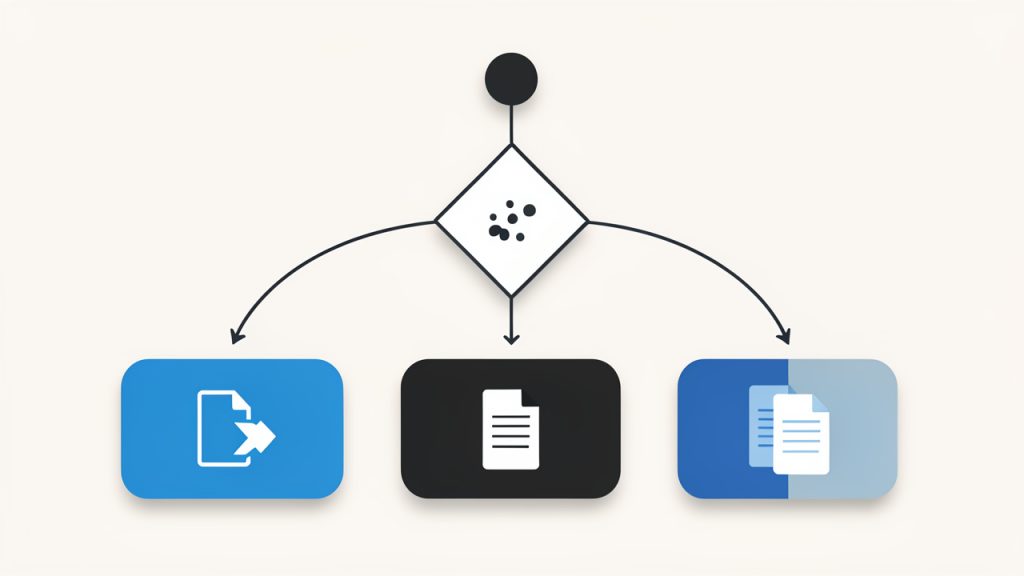
    A simple decision flowchart for the "Quick decision checklist": start node asks questions (Will this be edited/printed/archived? Is it for a modern website only? Does target app reject WebP? Is file size critical?) with arrows to outcomes: "Convert to PNG", "Keep WebP", or "Generate both (derive PNG for legacy)".

    3. Quick online tools to convert WebP to PNG

    If you need the fastest path, online converters are hard to beat for one-off conversions, quick proofs, and non-sensitive assets. Popular services include CloudConvert, Convertio, Ezgif, FreeConvert, and Online-Convert. They vary by batch support, metadata handling, file-size limits, and privacy posture. CloudConvert is flexible and supports batch jobs and an API. Convertio is fast and easy. Ezgif is lightweight and approachable for simple image tasks. FreeConvert and Online-Convert offer broad format support and more tuning options on paid tiers. For privacy-sensitive images, avoid third-party uploads and use an offline method instead.

    CloudConvert: https://cloudconvert.com, Convertio: https://convertio.co, Ezgif: https://ezgif.com, FreeConvert: https://www.freeconvert.com, Online-Convert: https://www.online-convert.com

    Security and privacy considerations for uploading images

    Online tools are convenient, but they create risk. If the image contains client work, private product shots, sensitive documents, internal screenshots, or personally identifiable information, uploading it to a third-party service may be inappropriate. Metadata is another concern. EXIF data can include camera info, location, timestamps, and software details. Some converters strip metadata automatically, while others may preserve parts of it. If privacy matters, assume nothing and verify the tool’s behavior. If the file is confidential, use an offline desktop method instead.

    4. Converting WebP to PNG on desktop

    Desktop conversion gives you more control, better privacy, and stronger batch workflow support. It is the right choice when you work with many files or care about repeatability.

    Windows: built-in and third-party options

    Windows users sometimes try Photos or Paint first. The trouble is that built-in tools can be inconsistent depending on version and installed codecs. A more dependable option is IrfanView, which is fast for image conversion and batch processing when the proper plugins are installed. The common workflow is to open the WebP file, choose save or export, and select PNG.

    Websites: https://www.microsoft.com/windows, https://www.irfanview.com

    macOS: Preview, ImageMagick, GraphicConverter

    On macOS, Preview is often enough for individual files: open the WebP, then export as PNG. For more control, ImageMagick is excellent for batch jobs, repeatable conversions, and automation. GraphicConverter provides a polished GUI with deep format support for users who want extensive options.

    Websites: https://www.apple.com, https://imagemagick.org, https://www.lemkesoft.de

    Linux: ImageMagick, GIMP, command-line examples

    Linux users typically rely on command-line tools. ImageMagick is the workhorse, and GIMP is a reliable GUI fallback. For a single file:

    magick input.webp output.png
    

    If your system uses the older command syntax:

    convert input.webp output.png
    

    For batch conversion in a directory:

    mkdir -p png_OUT
    for f in *.webp; do magick "$f" "${f%.webp}.png"; done
    

    ImageMagick usually preserves transparency automatically when the source supports alpha.

    Website: https://www.gimp.org

    Batch conversion with desktop apps

    Batch conversion is where desktop tools become much more efficient than online converters. IrfanView, GraphicConverter, and ImageMagick all support batch workflows. Processing dozens or thousands of files with consistent naming and predictable output makes desktop tools the smarter long-term option.

    5. Command-line and developer-friendly methods

    For developers, the command line is often the cleanest path because it is scriptable, auditable, and easy to integrate into build systems.

    ImageMagick: commands and flags

    ImageMagick can convert WebP to PNG, preserve alpha, and be integrated into shell scripts or CI jobs:

    magick input.webp output.png
    

    To keep metadata when possible:

    magick input.webp -define png:preserve-iCCP=true output.png
    

    Avoid -strip unless you want metadata removed. For batch conversion:

    for f in *.webp; do magick "$f" "${f%.webp}.png"; done
    

    ffmpeg: when to use it and example commands

    ffmpeg is useful in media pipelines, especially when WebP is part of a broader video or animation workflow. For a single WebP frame:

    ffmpeg -i input.webp output.png
    

    For animated WebP, ffmpeg can extract frames or inspect timing, though specialized WebP tools may be simpler for some tasks.

    Website: https://ffmpeg.org

    libwebp tools: dwebp usage and options

    The libwebp toolkit offers dwebp, a precise decoder for WebP files. For a dedicated WebP-to-PNG path:

    dwebp input.webp -o output.png
    

    libwebp tools can be easier to reason about than a general-purpose image suite when you need specific decoding behavior.

    Website: https://developers.google.com/speed/webp

    Node.js and Python libraries with sample code

    For application code, use libraries that already understand both formats.

    Node.js with sharp:

    import sharp from "sharp";
    
    await sharp("input.webp")
    ## .png()
      .toFile("output.png");
    

    sharp is fast and widely used in production.

    Python with Pillow:

    from PIL import Image
    
    img = Image.open("input.webp")
    img.save("output.png", "PNG")
    

    Pillow is ideal for scripts, automation, and lightweight batch jobs.

    Websites: https://sharp.pixelplumbing.com, https://python-pillow.org

    6. Automating conversion in workflows and CMS

    Manual conversion does not scale. If your team handles images regularly, automation will save time and reduce mistakes.

    Automated server-side conversion

    A common pattern is convert-on-upload. Store the original WebP, then create a PNG derivative for compatibility or downstream systems. This lets modern browsers receive WebP while legacy systems, admin tools, or print workflows get PNG. Another pattern is on-demand conversion, useful when PNG output is rare and you do not want to store multiple variants. The trade-off is extra compute at request time.

    Plugins and integrations for WordPress, Shopify, and headless CMSs

    Many CMS platforms have plugins or media pipelines that can serve format-specific variants. WordPress users often rely on image optimization plugins that generate or serve WebP while allowing fallback formats. For Shopify and headless CMS setups, the image pipeline around the platform is usually where conversion logic belongs, for example a middleware function that converts WebP to PNG only for systems that require it.

    Build-time conversion in static site generators

    Static site generators such as Gatsby, Hugo, and Eleventy are a strong fit for build-time image processing. If the site is rebuilt during deployment, you can generate PNG derivatives once and cache them as part of the output. This is useful when one source image must produce both a WebP asset for the site and a PNG asset for tooling that still expects PNG.

    7. Quality, color, and transparency pitfalls, and how to avoid them

    Conversion is usually safe, but subtle issues can surprise you.

    Common issues: color shifts, banding, alpha channel problems

    Color shifts often happen when color profiles are ignored or reinterpreted by different tools. Banding can appear if gradients are limited or if a lossy WebP is decoded and then viewed in contexts that expose quantization artifacts. Alpha channel issues are less common, but they matter. If transparency is present, make sure the tool preserves it and the target app understands the PNG alpha channel correctly.

    How to preserve transparency and color profiles

    Prefer tools known to preserve alpha reliably, such as ImageMagick, libwebp’s dwebp, Pillow, or sharp. For color accuracy, use tools that keep embedded profiles when possible. Avoid unnecessary metadata stripping unless intentional. When moving assets between design software and web workflows, verify the image in the target environment as part of QA.

    Testing and validation

    Open the converted PNG in at least two different viewers and compare it against the original. For teams, automate basic checks for dimensions, transparency presence, file size thresholds, and checksum tracking so problems show up before assets ship.

    8. Performance, storage, and best practices

    PNG is dependable, but it can be expensive in storage terms, so be selective.

    File size comparisons: WebP vs PNG

    As a rough rule, WebP often beats PNG on file size by a wide margin for photographic content and many mixed images. PNG can be acceptable for simple graphics, but it grows quickly with color complexity. For example, a 1 MB WebP might become a 3 MB or 5 MB PNG, depending on the image.

    When to use PNG-8 vs PNG-24 vs indexed palettes

    If the image has a limited color set, PNG-8 or indexed palettes can dramatically reduce size, which helps icons, simple logos, and flat graphics. Use PNG-24 for full color and smooth gradients. Test indexed palettes visually before adopting aggressive color reduction.

    Optimizing PNGs after conversion

    After converting, further shrink the result with PNG optimizers such as pngcrush, optipng, or zopflipng. A typical workflow is convert first, then optimize the PNG. That keeps quality decisions separate from compression tuning.

    Websites: http://optipng.sourceforge.net, https://pmt.sourceforge.io/pngcrush/, https://github.com/google/zopfli

    9. Privacy, security, and legal considerations

    Image conversion sounds harmless, but in business settings it can carry real risk.

    Risks of uploading images to third-party converters

    Third-party converters may store files temporarily, log metadata, or process uploads on infrastructure outside your control. For internal prototypes that may be fine. For client materials, unreleased product images, or sensitive screenshots, use offline tools.

    EXIF, IPR, and redistribution concerns

    EXIF metadata can reveal camera details, timestamps, and sometimes location data. When converting and redistributing assets, review metadata intentionally. Also remember conversion does not change ownership or usage rights. If you do not have the right to reuse an image, converting it does not make it safer to publish.

    Recommended safeguards and policies for teams

    Define when online conversion is allowed and when offline tools are mandatory. Use offline tools for anything confidential, strip metadata when appropriate, and document which conversion pipeline is used for public assets. That keeps compliance and process hygiene under control.

    10. Troubleshooting and FAQs

    Why does my converted PNG look different?

    Common causes include color profile differences, lossy source compression, or viewer discrepancies. If the source WebP was lossy, some detail loss is permanent. Try a different conversion tool, check whether metadata and profiles were preserved, and compare the image in a second viewer.

    How do I convert animated WebP to PNG?

    A single PNG cannot preserve animation. Animated WebP must be handled as frames. If you need still images, extract each frame. If you need animation preserved, consider GIF or MP4. ffmpeg or specialized WebP tools can help with frame extraction.

    I get errors with ImageMagick, what should I check?

    Confirm your ImageMagick build includes WebP support, check file permissions and path names, and use the correct command syntax for your version. On newer systems, use magick instead of the older convert command.

    How do I batch-convert thousands of images efficiently?

    Use a script and process files in chunks. ImageMagick or sharp are common choices. Add logging, retry handling, and post-conversion optimization so the workflow remains stable at scale.

    11. Cheat-sheet: commands and tools at a glance

    Task Tool Command
    Convert one WebP to PNG ImageMagick magick input.webp output.png
    Batch convert a folder ImageMagick for f in *.webp; do magick "$f" "${f%.webp}.png"; done
    Decode with libwebp dwebp dwebp input.webp -o output.png
    Convert in Node.js sharp sharp("input.webp").png().toFile("output.png")
    Convert in Python Pillow img.save("output.png", "PNG")
    Extract from animation workflow ffmpeg ffmpeg -i input.webp output.png

    For one-offs, use a trustworthy online converter for non-sensitive images. For offline desktop work, Preview, Paint, IrfanView, or GraphicConverter are convenient. For bulk server-side conversion, ImageMagick and sharp are strong general-purpose choices. For precision WebP decoding, use dwebp.

    Checklist before converting: confirm whether you really need PNG, whether the file contains transparency, and whether metadata matters. After converting, verify dimensions, transparency, color, and file size.

    12. Conclusion and recommended workflow

    The best WebP to PNG workflow depends on the job. If you need speed and the file is harmless, an online converter is fine. If you need control, privacy, or batch processing, use ImageMagick, dwebp, sharp, or Pillow. If you are building a modern web stack, consider keeping WebP for delivery and generating PNG only where compatibility demands it.

    A practical default is simple, keep WebP for performance, convert to PNG only when compatibility, editing, or workflow constraints require it. That approach saves storage, avoids unnecessary recompression, and keeps your image pipeline cleaner.

    Next step: choose one offline method, test it on a sample image with transparency and metadata, and standardize that conversion path for your team.

  • WebP to PNG: When to Convert, Tools & Commands

    WebP to PNG: When to Convert, Tools & Commands

    Converting WebP to PNG sounds simple until you actually need the result to work everywhere. Maybe a design team needs a transparent image in a legacy workflow. Maybe a CMS refuses WebP uploads. Maybe you just want a raster file you can edit without surprises.

    The good news is there are fast online tools, reliable desktop apps, and developer-friendly commands that make WebP to PNG conversion easy. The better news is that you do not always need to convert at all. In many cases, keeping WebP is the smarter choice.

    1. What is WebP and why convert it to PNG?

    WebP is a modern image format created by Google to reduce file size while keeping good visual quality. It supports both lossy compression, which discards some data to shrink files, and lossless compression, which preserves pixel data more faithfully. It also supports transparency, which makes it useful for logos, UI assets, and images with cutouts.

    PNG is older, but still incredibly important. It is a lossless format, so it preserves image data without the quality loss associated with recompression. PNG is widely supported across browsers, operating systems, editing apps, and print-oriented workflows, which is why it remains a default choice for screenshots, graphics, and files that need consistent handling.

    Side-by-side visual comparison showing a WebP file and a PNG file: icons or thumbnails with callouts for key attributes (lossy/lossless support, typical file size, transparency support, common use cases like web delivery vs editing/printing). Include a small bar or numeric indicator showing typical file-size difference.

    Overview of WebP: origins, features, and typical use cases

    WebP was designed for the web, especially where bandwidth matters. It usually delivers smaller files than PNG and often smaller than JPEG too, depending on the content. That makes it ideal for websites, responsive image delivery, e-commerce listings, and content-heavy pages where performance matters. If the image is going to be displayed in a browser and you control the environment, WebP is often the more efficient format.

    Overview of PNG: features, strengths, and when it’s preferred

    PNG shines when you need exact visual fidelity. It is especially good for screenshots, icons, diagrams, UI assets, and images that need transparent backgrounds. It is also favored when software compatibility matters. Many older applications, print tools, DAM systems, and content workflows still handle PNG more reliably than WebP.

    Why conversion is needed: compatibility, editing, transparency, and printing

    The most common reason to convert WebP to PNG is compatibility. Some apps, platforms, and legacy systems still do not accept WebP. Others accept it poorly, especially in editing pipelines or batch import workflows. PNG is often a better fit for image editing in many cases because it behaves predictably in tools like Photoshop alternatives, desktop viewers, and asset managers. If you work with printing, archived assets, or screenshots that must stay visually consistent, PNG is often the safer format.

    2. When you should and shouldn’t convert WebP to PNG

    This is the decision most people skip, but it matters. Conversion is useful when PNG solves a real problem. If the only reason is habit, keeping WebP may be better.

    When to convert: compatibility, editing, archiving, design work, screenshots and raster manipulation

    Convert to PNG when the file must work in a legacy app, be edited in a tool that does not handle WebP well, or be used in a workflow that expects PNG. It is also a good choice for screenshots, UI mockups, technical diagrams, and raster assets that may be annotated, retouched, or archived for long-term access. In these cases, PNG’s predictability is a practical advantage.

    When to keep WebP: web performance, storage, responsive images

    Keep WebP when the image is primarily for web delivery and you care about speed, storage efficiency, and lower bandwidth usage. For modern websites, WebP often offers a better trade-off, and serving WebP through responsive images can dramatically reduce payload size, especially for photo-heavy pages.

    Trade-offs: file size, quality, metadata, alpha/transparency fidelity

    The biggest trade-off is file size. PNG is typically larger than WebP, sometimes much larger. That matters for storage, backups, uploads, and page weight. Quality is more nuanced. If the source WebP is lossy, converting it to PNG does not restore lost detail. It only preserves the current decoded pixels. Transparency usually survives well, but color profiles and metadata may not always transfer cleanly depending on the tool. A simple rule helps here: convert when compatibility matters more than file size, and keep WebP when performance matters more than universal editing support.

    Quick decision checklist

    • Will this image be edited, printed, or archived? PNG is often better.
    • Will it be served on a modern website only? WebP is often better.
    • Does the target app reject WebP? Convert it.
    • Is file size critical? Keep WebP if possible.

    A simple decision flowchart for the "Quick decision checklist": start node asks questions (Will this be edited/printed/archived? Is it for a modern website only? Does target app reject WebP? Is file size critical?) with arrows to outcomes: "Convert to PNG", "Keep WebP", or "Generate both (derive PNG for legacy)".

    3. Quick online tools to convert WebP to PNG

    If you need the fastest path, online converters are hard to beat for one-off conversions, quick proofs, and non-sensitive assets. Popular services include CloudConvert, Convertio, Ezgif, FreeConvert, and Online-Convert. They vary by batch support, metadata handling, file-size limits, and privacy posture. CloudConvert is flexible and supports batch jobs and an API. Convertio is fast and easy. Ezgif is lightweight and approachable for simple image tasks. FreeConvert and Online-Convert offer broad format support and more tuning options on paid tiers. For privacy-sensitive images, avoid third-party uploads and use an offline method instead.

    CloudConvert: https://cloudconvert.com, Convertio: https://convertio.co, Ezgif: https://ezgif.com, FreeConvert: https://www.freeconvert.com, Online-Convert: https://www.online-convert.com

    Security and privacy considerations for uploading images

    Online tools are convenient, but they create risk. If the image contains client work, private product shots, sensitive documents, internal screenshots, or personally identifiable information, uploading it to a third-party service may be inappropriate. Metadata is another concern. EXIF data can include camera info, location, timestamps, and software details. Some converters strip metadata automatically, while others may preserve parts of it. If privacy matters, assume nothing and verify the tool’s behavior. If the file is confidential, use an offline desktop method instead.

    4. Converting WebP to PNG on desktop

    Desktop conversion gives you more control, better privacy, and stronger batch workflow support. It is the right choice when you work with many files or care about repeatability.

    Windows: built-in and third-party options

    Windows users sometimes try Photos or Paint first. The trouble is that built-in tools can be inconsistent depending on version and installed codecs. A more dependable option is IrfanView, which is fast for image conversion and batch processing when the proper plugins are installed. The common workflow is to open the WebP file, choose save or export, and select PNG.

    Websites: https://www.microsoft.com/windows, https://www.irfanview.com

    macOS: Preview, ImageMagick, GraphicConverter

    On macOS, Preview is often enough for individual files: open the WebP, then export as PNG. For more control, ImageMagick is excellent for batch jobs, repeatable conversions, and automation. GraphicConverter provides a polished GUI with deep format support for users who want extensive options.

    Websites: https://www.apple.com, https://imagemagick.org, https://www.lemkesoft.de

    Linux: ImageMagick, GIMP, command-line examples

    Linux users typically rely on command-line tools. ImageMagick is the workhorse, and GIMP is a reliable GUI fallback. For a single file:

    magick input.webp output.png
    

    If your system uses the older command syntax:

    convert input.webp output.png
    

    For batch conversion in a directory:

    mkdir -p png आउट
    for f in *.webp; do magick "$f" "png/${f%.webp}.png"; done
    

    ImageMagick usually preserves transparency automatically when the source supports alpha.

    Website: https://www.gimp.org

    Batch conversion with desktop apps

    Batch conversion is where desktop tools become much more efficient than online converters. IrfanView, GraphicConverter, and ImageMagick all support batch workflows. Processing dozens or thousands of files with consistent naming and predictable output makes desktop tools the smarter long-term option.

    5. Command-line and developer-friendly methods

    For developers, the command line is often the cleanest path because it is scriptable, auditable, and easy to integrate into build systems.

    ImageMagick: commands and flags

    ImageMagick can convert WebP to PNG, preserve alpha, and be integrated into shell scripts or CI jobs:

    magick input.webp output.png
    

    To keep metadata when possible:

    magick input.webp -define png:preserve-iCCP=true output.png
    

    Avoid -strip unless you want metadata removed. For batch conversion:

    for f in *.webp; do magick "$f" "${f%.webp}.png"; done
    

    ffmpeg: when to use it and example commands

    ffmpeg is useful in media pipelines, especially when WebP is part of a broader video or animation workflow. For a single WebP frame:

    ffmpeg -i input.webp output.png
    

    For animated WebP, ffmpeg can extract frames or inspect timing, though specialized WebP tools may be simpler for some tasks.

    Website: https://ffmpeg.org

    libwebp tools: dwebp usage and options

    The libwebp toolkit offers dwebp, a precise decoder for WebP files. For a dedicated WebP-to-PNG path:

    dwebp input.webp -o output.png
    

    libwebp tools can be easier to reason about than a general-purpose image suite when you need specific decoding behavior.

    Website: https://developers.google.com/speed/webp

    Node.js and Python libraries with sample code

    For application code, use libraries that already understand both formats.

    Node.js with sharp:

    import sharp from "sharp";
    await sharp("input.webp")
    ## .png()
      .toFile("output.png");
    

    sharp is fast and widely used in production.

    Python with Pillow:

    from PIL import Image
    img = Image.open("input.webp")
    img.save("output.png", "PNG")
    

    Pillow is ideal for scripts, automation, and lightweight batch jobs.

    Websites: https://sharp.pixelplumbing.com, https://python-pillow.org

    6. Automating conversion in workflows and CMS

    Manual conversion does not scale. If your team handles images regularly, automation will save time and reduce mistakes.

    Automated server-side conversion

    A common pattern is convert-on-upload. Store the original WebP, then create a PNG derivative for compatibility or downstream systems. This lets modern browsers receive WebP while legacy systems, admin tools, or print workflows get PNG. Another pattern is on-demand conversion, useful when PNG output is rare and you do not want to store multiple variants. The trade-off is extra compute at request time.

    Plugins and integrations for WordPress, Shopify, and headless CMSs

    Many CMS platforms have plugins or media pipelines that can serve format-specific variants. WordPress users often rely on image optimization plugins that generate or serve WebP while allowing fallback formats. For Shopify and headless CMS setups, the image pipeline around the platform is usually where conversion logic belongs, for example a middleware function that converts WebP to PNG only for systems that require it.

    Build-time conversion in static site generators

    Static site generators such as Gatsby, Hugo, and Eleventy are a strong fit for build-time image processing. If the site is rebuilt during deployment, you can generate PNG derivatives once and cache them as part of the output. This is useful when one source image must produce both a WebP asset for the site and a PNG asset for tooling that still expects PNG.

    7. Quality, color, and transparency pitfalls, and how to avoid them

    Conversion is usually safe, but subtle issues can surprise you.

    Common issues: color shifts, banding, alpha channel problems

    Color shifts often happen when color profiles are ignored or reinterpreted by different tools. Banding can appear if gradients are limited or if a lossy WebP is decoded and then viewed in contexts that expose quantization artifacts. Alpha channel issues are less common, but they matter. If transparency is present, make sure the tool preserves it and the target app understands the PNG alpha channel correctly.

    How to preserve transparency and color profiles

    Prefer tools known to preserve alpha reliably, such as ImageMagick, libwebp’s dwebp, Pillow, or sharp. For color accuracy, use tools that keep embedded profiles when possible. Avoid unnecessary metadata stripping unless intentional. When moving assets between design software and web workflows, verify the image in the target environment as part of QA.

    Testing and validation

    Open the converted PNG in at least two different viewers and compare it against the original. For teams, automate basic checks for dimensions, transparency presence, file size thresholds, and checksum tracking so problems show up before assets ship.

    8. Performance, storage, and best practices

    PNG is dependable, but it can be expensive in storage terms, so be selective.

    File size comparisons: WebP vs PNG

    As a rough rule, WebP often beats PNG on file size by a wide margin for photographic content and many mixed images. PNG can be acceptable for simple graphics, but it grows quickly with color complexity. For example, a 1 MB WebP might become a 3 MB or 5 MB PNG, depending on the image.

    When to use PNG-8 vs PNG-24 vs indexed palettes

    If the image has a limited color set, PNG-8 or indexed palettes can dramatically reduce size, which helps icons, simple logos, and flat graphics. Use PNG-24 for full color and smooth gradients. Test indexed palettes visually before adopting aggressive color reduction.

    Optimizing PNGs after conversion

    After converting, further shrink the result with PNG optimizers such as pngcrush, optipng, or zopflipng. A typical workflow is convert first, then optimize the PNG. That keeps quality decisions separate from compression tuning.

    Websites: http://optipng.sourceforge.net, https://pmt.sourceforge.io/pngcrush/, https://github.com/google/zopfli

    9. Privacy, security, and legal considerations

    Image conversion sounds harmless, but in business settings it can carry real risk.

    Risks of uploading images to third-party converters

    Third-party converters may store files temporarily, log metadata, or process uploads on infrastructure outside your control. For internal prototypes that may be fine. For client materials, unreleased product images, or sensitive screenshots, use offline tools.

    EXIF, IPR, and redistribution concerns

    EXIF metadata can reveal camera details, timestamps, and sometimes location data. When converting and redistributing assets, review metadata intentionally. Also remember conversion does not change ownership or usage rights. If you do not have the right to reuse an image, converting it does not make it safer to publish.

    Recommended safeguards and policies for teams

    Define when online conversion is allowed and when offline tools are mandatory. Use offline tools for anything confidential, strip metadata when appropriate, and document which conversion pipeline is used for public assets. That keeps compliance and process hygiene under control.

    10. Troubleshooting and FAQs

    Why does my converted PNG look different?

    Common causes include color profile differences, lossy source compression, or viewer discrepancies. If the source WebP was lossy, some detail loss is permanent. Try a different conversion tool, check whether metadata and profiles were preserved, and compare the image in a second viewer.

    How do I convert animated WebP to PNG?

    A single PNG cannot preserve animation. Animated WebP must be handled as frames. If you need still images, extract each frame. If you need animation preserved, consider GIF or MP4. ffmpeg or specialized WebP tools can help with frame extraction.

    I get errors with ImageMagick, what should I check?

    Confirm your ImageMagick build includes WebP support, check file permissions and path names, and use the correct command syntax for your version. On newer systems, use magick instead of the older convert command.

    How do I batch-convert thousands of images efficiently?

    Use a script and process files in chunks. ImageMagick or sharp are common choices. Add logging, retry handling, and post-conversion optimization so the workflow remains stable at scale.

    11. Cheat-sheet: commands and tools at a glance

    TaskToolCommand
    Convert one WebP to PNGImageMagickmagick input.webp output.png
    Batch convert a folderImageMagickfor f in *.webp; do magick "$f" "${f%.webp}.png"; done
    Decode with libwebpdwebpdwebp input.webp -o output.png
    Convert in Node.jssharpsharp("input.webp").png().toFile("output.png")
    Convert in PythonPillowimg.save("output.png", "PNG")
    Extract from animation workflowffmpegffmpeg -i input.webp output.png

    For one-offs, use a trustworthy online converter for non-sensitive images. For offline desktop work, Preview, Paint, IrfanView, or GraphicConverter are convenient. For bulk server-side conversion, ImageMagick and sharp are strong general-purpose choices. For precision WebP decoding, use dwebp.

    Checklist before converting: confirm whether you really need PNG, whether the file contains transparency, and whether metadata matters. After converting, verify dimensions, transparency, color, and file size.

    12. Conclusion and recommended workflow

    The best WebP to PNG workflow depends on the job. If you need speed and the file is harmless, an online converter is fine. If you need control, privacy, or batch processing, use ImageMagick, dwebp, sharp, or Pillow. If you are building a modern web stack, consider keeping WebP for delivery and generating PNG only where compatibility demands it.

    A practical default is simple, keep WebP for performance, convert to PNG only when compatibility, editing, or workflow constraints require it. That approach saves storage, avoids unnecessary recompression, and keeps your image pipeline cleaner.

    Next step: choose one offline method, test it on a sample image with transparency and metadata, and standardize that conversion path for your team.

  • Merge PDF Online Free: Fast, Private, Practical Guide

    Merge PDF Online Free: Fast, Private, Practical Guide

    Merging PDFs should take seconds, not become a mini document engineering project. Yet the moment multiple files are involved, report sections arrive out of order, page sizes clash, or a portal accepts only one upload, the simple task of combining documents turns into friction.

    This guide focuses on the real question behind “merge pdf online free”, which tool works fastest, which one respects privacy, and when an online service should be avoided altogether. It covers both quick consumer workflows and technical considerations that matter to developers, operations teams, and anyone handling structured documents at scale.

    The emphasis here is practical. You will get a short how-to, a ranked comparison of leading tools, reproducible test criteria, security notes, and local alternatives for cases where browser-based merging is the wrong choice.

    Merge PDF Online Free, Overview and Use Cases

    Problem statement: Why merge PDFs?

    PDF merging solves a very common operational constraint, many submission systems, procurement portals, HR applications, academic platforms, and government forms accept a single file only. When supporting material exists as separate PDFs, such as a cover letter, report appendix, invoice bundle, or scanned ID set, those files must be combined into one ordered deliverable.

    There is also a workflow efficiency angle. Combining related PDFs reduces attachment sprawl, simplifies version control, and minimizes upload retries. Instead of sending five files with naming conventions that may or may not survive email forwarding, a merged PDF creates a single artifact with deterministic page order.

    Common scenarios and user intent

    Most users searching for a free online PDF merger fall into a few patterns. One group needs a quick one-off utility for combining bills, contracts, or school submissions. Another group needs repeated browser-based processing without installing desktop software, see this resource on browser-based processing for that use case. A third group includes technical users who want to know whether the online workflow preserves page fidelity, metadata, bookmarks, or searchable text.

    A few cases are more nuanced. Scanned PDFs may be image-only and therefore not text searchable after merging unless OCR has already been applied, see OCR for background. Password-protected files add another constraint, because many online tools require decryption before upload; refer to Password-protected files for how that typically works. Mixed page sizes, rotated scans, and interactive forms can also change output quality if the service recompresses or flattens content during processing.

    Criteria for selecting an online merging tool

    A good online merger is not just about a visible Merge button. It should handle upload reliability, page reordering, and output fidelity without forcing registration for basic use. File size limits matter. So does whether the platform retains files on its servers, and for how long.

    For this comparison, the core criteria are security, free-tier practicality, speed, page-level control, output quality, and interface clarity. Secondary criteria include OCR-adjacent workflows, metadata behavior, ads or upsells, and whether the tool feels built for one-time consumer use or repeat operational use.

    Quick How-to: Merge PDFs Online (Step-by-Step)

    Generic workflow

    The online merge pattern is consistent across most tools. The sequence is usually: upload files, reorder them, optionally set page ranges, run the merge operation, then download the output PDF.

    A compact workflow looks like this:

    1. Upload the source PDFs via drag-and-drop or file picker.
    2. Reorder files or pages using thumbnail controls.
    3. Trim pages if the tool supports partial selection.
    4. Merge and wait for server-side or client-side processing to complete.
    5. Download the combined PDF and verify page order, orientation, and searchability.

    The expected outcome is one output file with preserved visual fidelity and correct sequence. If the service adds compression implicitly, the file size may shrink, but image quality can also change slightly.

    A clean linear flowchart showing the generic online-merge workflow: 1) Upload (drag-and-drop/file picker icon), 2) Reorder (thumbnails with drag handles), 3) Trim/Select pages (scissors or checkbox on a page), 4) Merge (button with progress spinner), 5) Download (down-arrow to disk). Include a small note under step 4 that some tools process in-browser while others upload to a server (two tiny branch icons).

    Detailed annotated example: using an online tool

    A typical example using a modern browser-based merger is straightforward. After opening the tool page, drag the PDFs into the drop zone. The UI should render file cards or page thumbnails. At that point, reorder by dragging thumbnails left to right or top to bottom, depending on the layout.

    If page-range controls are available, remove unwanted pages before merging. This matters for scanned packets where blank separator pages often inflate the result. When the merge operation starts, watch for two implementation differences, some tools upload first and process on the server, while others perform more logic in the browser. The user-facing result is similar, but the privacy model is not.

    Side-by-side comparison diagram labeled 'Client-side (Browser) Processing' and 'Server-side (Cloud) Processing'. Left: a browser window with files staying inside a dotted laptop outline, labeled 'no upload, data stays local / better privacy'. Right: files moving via arrows to a cloud/server icon with a clock and trash can indicating 'upload, temporary custody, retention/deletion policy'. Add privacy implications (encryption in transit, retention time) as small callouts.

    Troubleshooting common issues

    If a merged PDF opens with corrupted pages, the source file may already contain malformed objects or nonstandard incremental updates. Re-saving the original PDF through a desktop viewer or using a local repair tool such as qpdf can normalize it before upload.

    If a service rejects a file, the cause is usually one of three things: file-size caps, password protection, or unsupported PDF structure. Browser popup blocking can also interfere with downloads on some sites. When that happens, allow downloads for the domain and retry. If mixed orientation produces awkward results, check whether the tool supports page rotation before merging. If not, rotate locally first.

    Comparative Evaluation of Top Free Online PDF Mergers

    Evaluation criteria and methodology

    To compare tools fairly, the test set should reflect real-world variance, not just two clean office exports. For this article, the evaluation model assumes three input categories: a standard text PDF, a scanned image-heavy PDF, and a mixed-layout PDF with different page dimensions. A password-protected file is also relevant, though many free online tools will require prior unlocking.

    The benchmark dimensions are simple but useful: time to upload and merge, output file size delta, visual fidelity, page order controls, and friction on the free tier. The environment assumed is a modern Chromium-based browser on a stable broadband connection. Since public tool behavior changes over time, the matrix below should be read as operational guidance, not a permanent specification sheet.

    Tool comparison matrix

    Tool Free use without signup Page reordering Partial page selection Typical privacy posture Large file handling Ads/Upsell friction Best fit
    Home Yes Yes Varies by workflow Emphasis on simple web utility flow Good for routine tasks Low Fast everyday merging
    Smallpdf Yes, with limits Yes Limited in some flows Documented retention/deletion messaging Moderate Moderate Clean UI, general users
    ILovePDF Yes Yes Often stronger batch controls Document retention policy published Good Moderate Batch workflows
    Adobe Acrobat Online Yes, stronger with account Yes Basic Trusted brand, account-centric ecosystem Moderate Higher Users already in Adobe stack
    PDF24 Tools Yes Yes Yes in several tools Practical utility model Good Low Power users wanting options
    Sejda PDF Yes, limited tasks/day Yes Yes Usage limits clearly surfaced Moderate Moderate Precise edits on small jobs

    Short profiles of the top tier

    The leading services differ less in basic merging than in workflow polish and operational constraints. Some prioritize a frictionless drag-and-drop UI. Others push users gently toward accounts, cloud sync, or premium exports. The gap becomes visible with large files, repeated use, and edge cases like page extraction or mixed scan quality.

    For users who only need to merge pdf online free, nearly any major tool can complete a basic job. For users who need repeatability, privacy clarity, or cleaner page-level control, the differences matter more than marketing copy suggests.

    In-Depth Reviews: How the Top Tools Performed

    Screenshot of smallpdf.com

    2. Smallpdf

    Smallpdf is one of the most recognizable names in the category, and for good reason. Its interface is polished, predictable, and easy to understand even for first-time users. The merge flow follows a well-known pattern: upload, reorder, merge, and download. For general users, that straightforwardness is a major strength.

    Smallpdf stands out most in user experience design. Thumbnail handling is clear, the visual hierarchy is strong, and the service communicates status well during processing. Free-tier limits can appear quickly for frequent users, and upsell prompts are present across the product ecosystem, so heavy users may prefer a subscription. For casual merges and users who value interface clarity, Smallpdf is often the safest recommendation.

    Website: https://smallpdf.com/merge-pdf

    Screenshot of ilovepdf.com

    3. ILovePDF

    ILovePDF is particularly strong when multiple files, repeated tasks, or adjacent PDF operations are involved. The platform integrates splitting, compression, rotation, and format conversion in a coherent way, and it favors batch-oriented workflows. That makes it efficient for users preparing multi-document packets, office workflows, and support teams.

    The service balances speed and control well, though free use caps matter for frequent workloads. Interface density is slightly higher than single-purpose tools, and privacy-sensitive workflows still require careful policy review. For batch merging and adjacent PDF tasks, ILovePDF is a solid choice.

    Website: https://www.ilovepdf.com/merge_pdf

    1. Home

    Home earns a top placement because it addresses the core use case directly, a fast, low-friction web workflow for routine document tasks. For users who want to merge PDF files online for free without navigating a cluttered interface, that simplicity matters. The product is especially suitable for people who value speed and minimal UI overhead over ecosystem lock-in.

    What makes Home stand out is its practical utility profile. It feels closer to a focused browser tool than a broad document suite trying to route the user through multiple premium upsells. That is useful when the job is operational, not exploratory, such as combining a proposal, invoice packet, or compliance submission into one final file.

    Home emphasizes a browser-based merge, a simple upload and reorder flow, and a low-friction interface suitable for one-off and repeat document tasks. Advanced PDF editing depth may be narrower than larger suite-style platforms, and feature availability can vary depending on the specific tool page and workflow design. Pricing is positioned around accessible web utility usage, with core functionality available for users seeking a free online merge workflow.

    Website: https://jntzn.com

    4. Adobe Acrobat Online

    Adobe Acrobat Online brings brand trust and strong PDF pedigree. For users already inside the Adobe ecosystem, the online merge tool feels like a natural extension of existing workflows. The output quality is generally dependable for standard office documents, and the Adobe name reduces hesitation for some users.

    The trade-off is that the experience can feel more account-oriented than lightweight utility tools. Adobe is often best for users who already use Acrobat, Document Cloud, or related services, rather than for someone seeking the lightest possible free browser tool. Free-tier flexibility may be narrower than expected, and account prompts are more prominent.

    Website: https://www.adobe.com/acrobat/online/merge-pdf.html

    5. PDF24 Tools

    PDF24 Tools is often underrated. It offers a broad collection of PDF utilities with a practical, engineer-friendly orientation. The interface is less stylized than some competitors but compensates with flexibility and a strong utility-first feel.

    For users who want to go beyond merging into compression, rearrangement, extraction, and conversion without immediately hitting a subscription wall, PDF24 is a strong option. It appeals to technical users who care more about function density than branding polish.

    Website: https://tools.pdf24.org/en/merge-pdf

    6. Sejda PDF

    Sejda PDF is notable for offering more precise document controls than many casual web utilities. It is especially useful for smaller, deliberate jobs where the user cares about page-level manipulation and adjacent edits, not just a raw file join operation.

    Its main limitation is visible usage gating. For occasional users, that is acceptable. For frequent use, the free tier may feel restrictive. Even so, Sejda remains one of the better choices when the merge task sits inside a more detailed PDF editing sequence.

    Website: https://www.sejda.com/merge-pdf

    Security, Privacy, and Legal Considerations

    Data lifecycle: upload, processing, storage, deletion

    When using any service to merge pdf online free, the key technical question is where the file is processed. If the tool uploads your PDFs to a server, the provider potentially has temporary custody of the document contents. That means your risk profile depends on transport encryption, storage duration, deletion policy, and internal access controls.

    A published deletion window is helpful, but it is not the same as client-side processing. If the material contains contracts, personally identifiable information, health data, payroll records, or unreleased product information, browser convenience should not override data classification rules. For highly sensitive documents, prefer local processing to avoid third-party custody.

    Encryption and server-side processing

    HTTPS protects documents in transit between browser and server, but it does not mean the provider never sees the files. Many online PDF mergers process content server-side, which is operationally normal but important to understand. A stricter privacy model is one where more processing happens locally in the browser using JavaScript or WebAssembly.

    For sensitive content, the safer decision is often to merge locally using desktop or command-line tools. That avoids third-party upload entirely and gives better control over logs, temporary files, and retention.

    Handling confidential PDFs

    A practical rule is simple. If disclosure would create legal, contractual, regulatory, or reputational risk, do not upload the file to an unknown web tool. Use a trusted provider with explicit retention documentation or a local toolchain instead.

    For scanned records containing IDs, signatures, bank information, or HR data, local processing is usually the right default. Online tools are best reserved for low-sensitivity documents where convenience outweighs the privacy trade-off.

    Advanced Options and Alternatives

    Local and CLI alternatives

    For developers and technical users, local command-line tools are often superior. They are faster on large batches, more scriptable, and safer for sensitive files.

    Using qpdf, a simple merge command is:

    qpdf --empty --pages file1.pdf file2.pdf file3.pdf -- merged.pdf
    

    With Ghostscript, a common merge pattern is:

    gs -dBATCH -dNOPAUSE -q -sDEVICE=pdfwrite -sOutputFile=merged.pdf file1.pdf file2.pdf file3.pdf
    

    For older workflows, pdftk still appears in many automation scripts:

    pdftk file1.pdf file2.pdf cat output merged.pdf
    

    These tools are especially useful when merging must be embedded into CI jobs, internal portals, scheduled scripts, or compliance workflows.

    Desktop GUI alternatives

    On macOS, Preview can merge PDFs with almost no learning curve. Adobe Acrobat desktop provides more control, especially for bookmarks, forms, and comments. Free editors and utility suites can also handle local merging without uploading anything.

    Desktop tools are usually the best middle ground for users who want visual interaction but cannot justify server-side exposure of documents. They also tend to perform better with very large files or unstable internet connections.

    Browser-side JavaScript option

    For privacy-preserving workflows, browser or Node-based libraries such as pdf-lib can merge documents without relying on a third-party hosted merge service. A minimal Node example looks like this:

    import { PDFDocument } from 'pdf-lib';
    import fs from 'fs';
    
    const outPdf = await PDFDocument.create();
    
    for (const path of ['file1.pdf', 'file2.pdf']) {
      const bytes = fs.readFileSync(path);
      const src = await PDFDocument.load(bytes);
      const pages = await outPdf.copyPages(src, src.getPageIndices());
      pages.forEach((p) => outPdf.addPage(p));
    }
    
    const merged = await outPdf.save();
    fs.writeFileSync('merged.pdf', merged);
    

    This approach is attractive for developers building internal tools where privacy and automation matter as much as convenience.

    Best Practices and Optimization Tips

    Pre-merge preparation

    Before merging, normalize what can be normalized. Remove blank pages, rotate sideways scans, and flatten interactive forms if the destination system expects static output. If page sizes vary dramatically, the final file may look inconsistent even though the merge succeeds technically.

    If searchability matters, run OCR before merging image-only scans. Merging does not magically create searchable text, it only combines document structure and page content as provided by the source files.

    Post-merge optimization

    After generating the merged PDF, compression may be useful, but it should be intentional. Aggressive recompression can degrade charts, screenshots, or scanned text. If web delivery matters, linearization can improve first-page loading behavior.

    A common Ghostscript compression pattern is:

    gs -sDEVICE=pdfwrite -dCompatibilityLevel=1.4 -dPDFSETTINGS=/ebook -dNOPAUSE -dQUIET -dBATCH -sOutputFile=optimized.pdf merged.pdf
    

    And linearization with qpdf looks like this:

    qpdf --linearize merged.pdf merged-linearized.pdf
    

    Accessibility considerations

    Accessibility is often ignored in merge workflows. If the source PDFs are tagged inconsistently, the merged result may not preserve a coherent reading order for assistive technology. This matters for public-sector, educational, and enterprise documents.

    If PDF/UA compliance or tagged structure matters, use a more capable desktop workflow for verification. Online merge tools typically focus on page assembly, not semantic remediation.

    FAQs, Short Technical Answers

    Will online merging reduce PDF quality?

    Usually not, if the tool only concatenates page objects without recompressing assets. It can reduce quality if the service also optimizes or compresses output automatically.

    Are merged PDFs searchable?

    Yes, if the source PDFs already contain selectable text or OCR text layers. No, if the source pages are scanned images without OCR.

    Can page numbers and bookmarks be preserved automatically?

    Sometimes. Page visuals are usually preserved. Bookmarks, metadata, forms, and navigation structures are more tool-dependent and often handled better by desktop or CLI tools.

    Appendix: Test Files, Commands, and Audit Log

    Test files used

    A reproducible test set should include one text-heavy office PDF, one scanned PDF at roughly 300 DPI, and one mixed-layout PDF with different page sizes and orientations. Adding a password-protected sample is useful for rejection-path testing.

    This mix exposes the edge cases that casual comparisons miss. A tool that looks identical on two tiny office exports may behave quite differently on image-heavy scans or awkward source dimensions.

    Raw commands referenced

    The commands shown earlier for qpdf, Ghostscript, pdftk, and pdf-lib are sufficient to reproduce an offline comparison baseline. These local baselines are useful because they separate browser convenience from document-processing capability.

    Privacy checklist and decision tree

    If the file is low sensitivity, under the service limit, and needed quickly, an online tool is reasonable. If it contains regulated data, trade secrets, legal records, or identity material, prefer local processing. If repeatability and scripting matter, choose CLI tools. If visual page arrangement matters but privacy is still important, use a local desktop GUI.

    Conclusion and Recommendations

    For most users searching merge pdf online free, the best choice depends less on raw merge capability and more on context. Home is a strong top option when speed, simplicity, and low-friction browser use are the priority. Smallpdf is excellent for users who want the most polished interface. ILovePDF is especially good for batch-oriented workflows and adjacent PDF tasks.

    If the files are sensitive, the recommendation changes immediately. Use qpdf, Ghostscript, Preview, or another local tool and avoid uploading confidential material. The next step is simple: pick an online tool for convenience when the documents are routine, and switch to local processing the moment privacy, scale, or compliance starts to matter.

  • Convert JPG to PDF Online Free: Fast, Secure & Easy

    Convert JPG to PDF Online Free: Fast, Secure & Easy

    A folder full of JPG files looks manageable until it needs to become one shareable document. That is the point where people start searching for how to convert jpg to pdf online free, usually with urgency. It may be a scanned contract, handwritten notes, product images, receipts, or a set of screenshots that need to be sent in a clean format.

    The appeal is obvious. PDF is portable, predictable, and accepted almost everywhere. JPG is easy to capture, but awkward to organize when multiple images need to be bundled into a single file. A free online JPG to PDF converter closes that gap quickly, often without requiring software installation, account creation, or technical setup.

    For developers, operations teams, students, and everyday users alike, the value is not just convenience, it is workflow compression. A task that once required desktop tools can now be completed in a browser in minutes, sometimes in seconds, with drag-and-drop simplicity and acceptable output quality.

    What is convert jpg to pdf online free?

    The phrase convert jpg to pdf online free refers to using a web-based tool that transforms one or more JPG image files into a PDF document without charging a fee. In practical terms, the user uploads image files, the service processes them on a remote server or in the browser, and then returns a downloadable PDF.

    This solves a common format mismatch. JPG is an image format optimized for photographs and compressed visuals. PDF is a document container designed to preserve layout, improve portability, and simplify sharing across devices and operating systems. When the objective is to send a document rather than a loose set of images, PDF becomes the more functional format.

    There is also an important structural distinction. A JPG file contains a single image object. A PDF can contain multiple pages, embedded images, metadata, and layout instructions. That means several JPGs can be merged into a single ordered document, which is especially useful for forms, invoices, scanned pages, design proofs, and report attachments.

    A side-by-side comparison diagram: left side labeled 'JPG' showing a single raster image thumbnail; right side labeled 'PDF' showing a stack of pages with small image thumbnails on each page plus icons for metadata and layout (e.g., text lines, page numbers).

    Online conversion tools reduce friction because they remove installation and configuration requirements. Instead of opening a desktop editor, exporting files, and manually assembling pages, the process happens in the browser. For users who need speed and minimal setup, this is often the decisive advantage.

    Key Aspects of convert jpg to pdf online free

    Why people convert JPG to PDF in the first place

    The most common reason is document control. A batch of images can feel fragmented. A PDF creates a single, coherent artifact that is easier to upload to portals, email to clients, archive in cloud storage, or attach to support tickets.

    Compatibility is another driver. Many institutions, job portals, finance platforms, and government websites prefer or require PDF uploads. Even if the original content starts as phone photos or exported screenshots, converting those JPGs into PDF is often necessary just to complete the submission.

    There is also a presentation benefit. PDF looks intentional and suggests finality and structure. A set of JPGs may be interpreted as raw source material, while a PDF reads as a finished document. That distinction matters in business communication, internal reviews, and client-facing workflows.

    The main benefits of using an online free converter

    Accessibility is the strongest benefit. A free online JPG to PDF converter can usually be used from Windows, macOS, Linux, Android, and iPhone devices with nothing more than a browser and internet connection. This makes it practical for distributed teams and users working across multiple devices.

    Speed is the next factor. For small to medium conversion jobs, browser-based tools are often faster than installing software. Upload, reorder, convert, download: the interaction model is optimized for quick output.

    Cost matters too. Not every use case justifies a paid PDF suite. If the requirement is straightforward, such as combining five JPG receipts into one PDF, a free solution is often sufficient. For occasional users, this is efficient. For teams, it can reduce unnecessary software sprawl.

    What to evaluate before using a free online tool

    Not all converters are equal. Privacy should be the first checkpoint. If the JPG files contain IDs, contracts, medical information, financial records, or internal screenshots, the handling policy matters. Some services process files on remote servers and delete them after a short period. Others may be less explicit. Users should look for clear statements on retention, encryption, and deletion.

    Output control is another consideration. Basic tools may only convert in default settings, while better platforms allow page reordering, margin settings, orientation selection, page size adjustment, and compression control. These options affect whether the final PDF is usable for print, archive, or formal submission.

    File size behavior is the third factor. JPG images can be heavily compressed already, but combining many large images into one PDF can still produce a bulky file. A good converter balances image fidelity with reasonable PDF size. If a portal has strict upload limits, this becomes critical.

    Common limitations users should expect

    Free services often have boundaries, such as file count caps, maximum upload size, reduced speed during high traffic, or limitations on advanced editing features. That does not make them ineffective, but it does define the appropriate use case.

    Image handling can be inconsistent. Some converters preserve original dimensions well, while others aggressively scale or center images with wide margins. If visual accuracy matters, for example in design proofs or scanned records, test output quality before relying on a tool repeatedly.

    Ordering is another common issue. Multi-image PDF creation depends on correct sequence. If the upload interface is not explicit, pages may appear in alphabetical order, upload order, or an arbitrary drag-and-drop arrangement. That matters when converting documents with multiple pages.

    Online conversion versus desktop conversion

    The choice between online and desktop tools depends on context. Online conversion is ideal for speed, occasional use, and low-friction access. Desktop conversion is often better for sensitive documents, bulk processing, and advanced layout or OCR workflows.

    The trade-off can be summarized clearly:

    Criteria Online Free JPG to PDF Tools Desktop PDF Software
    Setup No installation required Installation required
    Speed for quick jobs Very fast Moderate
    Privacy control Depends on provider Usually higher
    Advanced features Often limited Usually extensive
    Cost Often free Frequently paid
    Best use case Occasional conversions Frequent or sensitive workflows

    For most users searching convert jpg to pdf online free, the immediate need is transactional rather than strategic. They want a reliable result now. That is where online tools perform best.

    How to Get Started with convert jpg to pdf online free

    A practical workflow that avoids common mistakes

    A clean result begins before upload. The source JPG files should be reviewed for orientation, clarity, and naming. If the images come from a phone camera, rotate them correctly first. If they represent multiple pages of a document, rename them in sequence so the intended order is obvious.

    Image quality also deserves attention. A blurry JPG does not become sharper inside a PDF. Conversion changes the container, not the source fidelity. If the original image is poorly lit, cropped badly, or captured at an angle, the output PDF will preserve those problems.

    A simple web UI mockup showing multiple JPG thumbnails being dragged into order, a prominent 'Convert' button, and a single PDF file icon with a download arrow. Include small labels: 'Upload', 'Reorder', 'Convert', 'Download'.

    For routine conversions, the workflow is usually simple. Upload the JPG files to a trusted online converter, arrange the images in the correct page order, adjust settings such as page size, margin, and orientation if available, convert and download the final PDF, and verify the output before sending or uploading it elsewhere.

    That last step matters more than users think. Open the PDF and inspect each page. Check readability, sequence, cropping, and file size. A 20-second review can prevent a failed submission or an embarrassing resend.

    Choosing the right settings for better output

    Page size affects readability and appearance. If the converter offers standard sizes like A4 or Letter, choose the one aligned with the destination context. Business and administrative use often expects one of those. If the images are photos rather than scanned pages, a fit-to-image layout may look better.

    Margins influence how polished the document feels. Zero-margin output can maximize image area, but modest spacing often improves readability and print behavior. For scanned paperwork, centered pages with consistent margins usually look more professional.

    Orientation should follow content, not convenience. Portrait is best for documents, forms, and notes. Landscape suits slides, dashboards, and wide screenshots. If the converter supports per-page orientation poorly, it may be worth rotating the JPGs before upload.

    Privacy and security considerations

    When using any service to convert jpg to pdf online free, assume the files are leaving the local device unless the tool explicitly states browser-only processing. That does not mean online conversion is unsafe, it means the user should apply judgment proportional to the data sensitivity.

    A public menu photo or generic presentation slide carries minimal risk. A passport scan, internal architecture diagram, legal agreement, or medical record is different. In those cases, a more controlled solution is appropriate. For teams, security is not only about encryption, it also includes retention policy, access logs, permission boundaries, and confidence in where files are processed.

    When free online tools are enough, and when they are not

    A free tool is enough when the use case is simple, low-risk, and occasional. A few receipts, a school assignment, a short image bundle for email, these are well within the strengths of browser-based converters.

    The threshold changes when the process becomes repetitive or business-critical. If a user converts dozens of image sets weekly, needs consistent page sizing, or must protect sensitive input, then the free tool model starts to show strain. At that point, efficiency is not just about zero cost, it is about minimizing rework and reducing uncertainty.

    Developers and technical users often evaluate tools through this lens. The question is not merely, “Can it convert?” The better question is, “Can it convert reliably, predictably, and with acceptable handling of sensitive data?” That distinction separates a convenient utility from a robust workflow component.

    Typical use cases across different audiences

    Students often need to turn photographed notes or assignment pages into a single PDF for submission systems. Freelancers convert JPGs into PDF for invoices, signed agreements, and portfolio pages. Support teams may bundle screenshots into one document for escalation records. Operations staff frequently combine scanned forms for archive or compliance workflows.

    Developers encounter this need as well, even if indirectly. Product documentation, bug reporting, UI review packs, and screenshot-based QA artifacts often benefit from PDF packaging. While the actual conversion may be non-technical, the underlying concern is familiar: reduce manual overhead and standardize output.

    That is why the search term convert jpg to pdf online free remains consistently relevant. It addresses a simple requirement, but one that sits at the intersection of usability, compatibility, and time efficiency.

    Conclusion

    To convert jpg to pdf online free is to solve a very practical format problem with minimal friction. JPG files are easy to create, but PDF files are easier to package, share, upload, and archive. Online tools make that transition fast, especially for low-volume and low-risk tasks.

    The best results come from using a trusted service, preparing source images carefully, checking page order, and reviewing the final PDF before distribution. For casual use, a free online converter is often all that is needed. For recurring or sensitive workflows, a more structured solution can provide a better long-term path.

    The next step is straightforward. Gather the JPG files, choose a reputable converter, test the output on a small batch, and confirm that the PDF meets your quality and privacy requirements. That single habit turns a quick fix into a reliable process.